
南シャルキーア県
南シャルキーヤ県は、オマーンの北東部に位置し、東はアラビア海、南はシャルキーヤ砂漠、西はダーヒリーヤ県と接しています。
県には、スール、アル・カーミル・ワ・アル・ワフィ、ジャーラン・バニー・ブ・ハサン、ジャーラン・バニー・ブ・アリー、マシーラの5つのウィラーヤがあり、行政中心地はスールです。人口は369,972人です。
観光、道路、産業など多様な分野で開発が進行中です。液化天然ガス(LNG)プロジェクト、尿素・アンモニア肥料工場、スール産業地区などが重要なプロジェクトとして挙げられます。
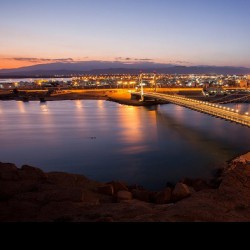
The Wilayat of Sur
It is located on the northern side of the eastern coast of Oman. It is bordered to the north by the Wilayat of Qurayat and to the south by the Wilayats of Ja'alan Bani Bu Ali, Ja'alan Bani Bu Hassan and Al Kamil Wal Wafi. As for the western side, it is bordered by Wadi Bani Khalid. The Wilayat of Sur is approximately 337 km away from the capital, Muscat, and it uses the Ghanjah ship as its symbol.It has approximately 74 population centres, including Sur, Barr, Bouira, and Al Ghaleela. The wilayat includes the Niyabat of Ras Al Hadd, which is located in the southeast of the wilayat in addition to the Niyabat of Tiwi, Al-Aijah Peninsula and Qalhat. The Wilayat of Sur has a diverse nature as it combines mountains, plains and coasts. It contains Jabal Wadi Shab, Jabal Mahdi, Jabal Arra, Jabal Kamas, Jabal Bani Jabir, Wadi Al Fulaij, Wadi Tiwi, Wadi Al Manqal, Wadi Kabda, and Wadi Bilad Sur. There is also the cave of Khashlat Mukndali (Majlis Al Jin) in Wadi Bani Jabir, which is one of the largest caves in Oman and the third largest in the world. There are 107 falajs in the Wilayat of Sur, including 106 living ones. Among the falajs of the wilayat is falaj Al Jailah, which was added to the World Heritage List in 2006. It has many creeks, including Khor Al Hajar, Khor Jarama and Khor Al Batah. The natural resources vary in the Wilayat of Sur, where there is the Ras Al Hadd Nature Reserve, which includes species of green turtles, many fish and crustaceans, and species of birds, including seagulls and terns. There are also wild animals such as wild hares, Ethiopian hedgehogs, red foxes and deer. Crimean and coral trees are found in Khor Jarama, which is located in the Ras Al Hadd Reserve. The wilayat is known for its archaeological sites in Ras Al Hadd and Ras Al Jinz dating back to between the third millennium BC and the first millennium BC. A brick warehouse dating back to the third millennium BC was also found, in addition to jewelry and pottery. There are also historical landmarks such as the Sunaysilah Fort, the Bilad Sur Fort, the Aijah Fort, the Ras Al Hadd Fort, the Bawayat Al Masharifah Tower and the Al-Rafsa Fort. The Wilayat of Sur is famous for many handcrafts and industries, including agriculture, trade, fishing, gold and silver crafting, textile, daggers’ making, swords’ making and shipbuilding, such as ghnajah, sambuq, badan, baghlah, boum, shu’i, jalbout and shashah. The Wilayat of Sur is known for some traditional arts, such as Al-Razhah, Al-Midan, Al-Shobani, Al-Tamboura, Al-Sharah, Al-Makwara and Al-Madima.
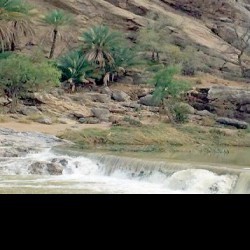
The Wilayat of Al Kamil Wal Wafi
The Wilayat of Al-Kamil Wal-Wafi overlooks Wadi Al-Batha and is bordered to the north by the Wilayat of Wadi Bani Khalid, to the south by the Wilayat of Ja'alan Bani Bu Hassan, to the east by the Wilayat of Sur, and to the west by the Wilayat of Bidiyah. It is surrounded by mountains from the north and east and it uses the horse as its symbol. It has about 40 population settlements, including Al-Kamil, Al-Wafi, Tawi Hatem and Tahwat Wati.The nature of the Wilayat of Al Kamil Wal Wafi varies between sand dunes and water springs. Among its springs are Ayn Al Rassah, Ayn Falaj Yastin and Ayn Falaj Samood. The residents of the wilayat also depend on falajs to pull out and use groundwater, as there are 42 falajs, 21 of which are living. There is also the Al-Sulayyil Nature Reserve, which combines sand dunes, mountains and valleys. And there are wild animals such as deer, wild cats and red foxes, in addition to types of wild trees such as samr, silm, sidr and sarh. The wilayat includes historical sites such as Al Kamil Fort and Al Wafi Fort. There is also the Al-Wafi Mosque, which was built nearly 400 years ago, and it has tourist villages such as Qaryat Saiq, Qaryat Al-Batin, and Qaryat Mazrou. The residents of the wilayat engage in many economic activities, including agriculture, blacksmithing, grazing, horse, camels and cattle breeding, and jewelry making. Among the arts that are performed in the wilayat are Al-Razhah, Al-Aazi, Al-Hambal, Al-Taghroud, Al-Tashuhshuh, Al-Sharh, Al-Tariq, Al-Wanna, Al-Maidan, Al-Muzaifniyah, and Al-Madima. It is also famous for holding camel races on occasions.
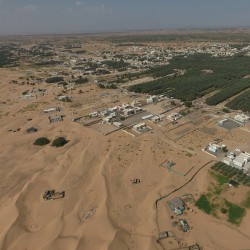
The Wilayat of Ja’alan Bani Bu Hassan
It is one of the wilayats of the Governorate of South Al Sharqiyah. It is bordered to the north by the Wilayat of Al-Kamil Wal-Wafi, to the south by the Wilayat of Ja'alan Bani Bu Ali, to the east by the Wilayat of Sur and to the west by the Wilayat of Bidbid and the Sharqiyah Sands. It uses the spear as its symbol. It has about 87population centres, including Ja’alan Bani Bu Hassan, Falaj Al-Mashayekh, Al-Ghayn, Qahid and Al-Juwaira. The nature of the Wilayat of Ja'alan Bani Bu Hassan varies between plains, mountains, caves and waterfalls. Among its mountains are Jabal Qahwan, which is infested with caves and hollows, such as the cave of Matatib, the cave of Al-Halifah, the cave of Wadi Al-Muraish, the cave of Matira, and the cave of Wadi Al-Atan. There are many springs and falajs, such as Ayn Jabal Qahwan, Ayn Al-Khatm, Ayn Al-Blaida, Ayn Dima, Ayn Al-Aqaba, Ayn Minhal and Ayn Umm Al-Baqar. There are also about 32 falajs, of which 25 are living ones. Wild trees are spread in the Wilayat of Sur as well as wild animals such as Arabian ibexes and hares. It also has historical landmarks such as the Awlad Murshid Fort, Al-Fulaij Fort and Ja'alan Bani Bu Hassan Fort. People practice crafts and industries, including agriculture, herding, camel and livestock breeding, fishing, gold and silver crafting, textiles and leather industries (locally known as Al Shamarah). The arts performed in the Wilayat of Ja’alan Bani Bu Hassan include Al-Razhah, Al-Aazi, Al-Madima, Al-Maidan, Al-Tashuhshuh and Al-Rayouh. Horse and camel races are also held there. The Ja’alan Fort is an archaeological defensive fortification in the town of Mahyol and was built in the ninth century AD (third century AH) during the reign of Imam Al-Muhanna bin Jaifar. Several successive additions, restorations and amendments were made during the reign of Sayyid Saeed bin Sultan Al Busaidi in the nineteenth century A.D. (the thirteenth century AH) and during the reign of His Majesty Sultan Qaboos bin Said in the year 1991 AD. The fortress has fences of up to 5 metres high, and is almost square in shape, built with stones and sarooj, and is covered with teak and sandalwood, topped by mats of palm fronds. The area of the fort is 5000 square meters, and it has two large gates, a main gate in the western wall and a branch gate in the eastern wall. At its northwest corner is a tower called the house guard. The fort has a large courtyard, which includes new facilities next to the old ones, including the administrative office building and its facilities, near the western wall to the right of the interior of the main entrance. It included facilities that collapsed, such as the judge’s house and the school building, which were attached to the southern wall. The main building is located in the northwest corner of the fort. It is a semi-circular building and some of its units are rectangular and consist of two floors. The first is a long hallway through which you enter the main building through a large wooden door and the second is a multi-purpose residential unit. This building rises its walls 12 metres and the bottom third is filled and units are located on it, whose sizes and shapes vary according to their usage. These units surround a circular tiled square with a diameter of 50 metres and divided into two parts with a wall in the middle of the entrance. The largest part of them is located to the left of the interior of the building, and it is dedicated to the official issues. It includes Barzat Al-Wali, the Najwa room, the Guard room, the guest reception hall, the dates’ store, the mosque, the men's prison, the women's prison room, and a defensive tower. As for the smaller part, it is located to the right of the interior to the building, and it is intended for the family issues. It includes the governor's main residence suite, which consists of two floors and contains four rooms and a bathroom, located on the eastern side of the building. It also includes the sub-wali residence suite, which consists of two rooms and a bathroom and occupies the second floor only. This is because the first floor is the entrance (Al Sabah) through which it enters the main building of the fort. This part also includes a feeding store, shower rooms, weapons rooms, and defensive tower. In choosing the location of the fort, the availability of water and food for its inhabitants was taken into consideration, as behind it there are large agricultural lands designated for its products. As for the water, three wells were drilled, two in the courtyard of the external fortress and one in the open courtyard of the main building of the fortress. Each of these wells was provided with lights and showers. The fort's windows and openings are designed to provide lighting and ventilation, and this is evident in the Barzah, where the governor receives people twice a day. Most of the decorations in the fort are found on its entrances and doors. Most of the main entrances have vaulted arches, framed by various geometric shapes. As for its doors, there are almost no vegetal drawings in the walls of the main building of the fort. In the walls of the main building of the fortress, geometric motifs consisting of squares are made of painted plaster.
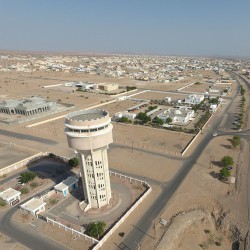
The Wilayat of Ja’alan Bani Bu Ali
It is one of the wilayats of the South Sharqiyah Governorate, which overlooks the Arabian Sea from the east, and it is bordered to the north by the Wilayat of Sur, to the south by the Governorate of Al Wusta, and from the west by the wilayats of Ja’alan Bani Bu Hasan and Bidiyah. It is about 300 km away from the capital, Muscat. The Al Hamouda Fort is the symbol of the Wilayat of Ja’alan Bani Bu Ali. It has about 93 population centres, including Ja’alan Bani Bu Ali, Al-Ashkhara, Asilah, Al-Suwaih and Ras Ruwais. The Wilayat has a desert coastal environment which varies between valleys, springs, and creeks. There are valleys in Ja’alan, such as Wadi Al-Batha, Wadi al-Labidi, which is abundant with sand dunes and wild trees, Wadi Sal, Wadi Jarif, Wadi Abu Fashiga and Wadi Al-Rawda. Among its creeks are Khor Omar and Khor Aweija in Al Ashkhara. It has about 101 falajs, of which 90 are still living. There are also types of wild trees, such as samr, ghaff and shakhr. Ja'alan Bani Bu Ali also includes many archaeological and historical sites such as the Suwaih site, which dates back to the period between the sixth millennium to the fourth millennium BC, the Al Hamouda Fort, the Al-Badi'ah Fort, the Hasid Fort, the Luba Fort, the Jabia Fort, and the Great Mosque built in the eleventh century AH and contains 52 domes. Residents of the Wilayat of Ja’alan Bani Bu Ali practice agriculture, herding, livestock raising, fishing, trade, shipbuilding, and the textile industry. Among the traditional musical arts in Ja'alan Bani Bu Ali are Al-Razhah, Al-Wanna, Al-Taghroud, Al-Tariq, Al-Muzaifniyah, and sea arts.
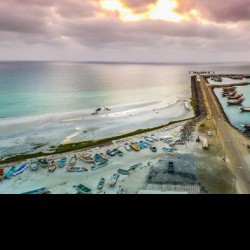
The Wilayat of Masirah
It is an island located near the southeast coast of Oman. It is the largest island in Oman, with an area of 655 km2 and a coastline of 145 km. There are about 49 communities, including Al-Samar village, in which Ayn Al-Safah is located, and Marsys village, which is the second largest in terms of population density, in addition to the village of Sur Masirah, which has the first unpaved airport in 1382 AH (1963 AD). There are many archaeological sites from different times extending from the second millennium BC to the Islamic eras. The Wilayat of Masirah also has a fort built by Muhammad bin Khalfan Al-Maj’ali of stones and sarooj and has two towers in the north and south corner. There is also another fort in Defayat in the wilayat made of plaster and stones. There are several valleys in the Wilayat of Masirah, including: Wadi Bilad, Wadi Mereisid, Wadi Aweina, Wadi Araf, Wadi Madi, Wadi Mughr, Wadi Al Hami, Wadi Rasya, Wadi Ibouti, Wadi Al Qattara, Wadi Muwaidi, Wadi Doh and Wadi Defayat.There are also many springs, including: Ayn Qattara, Ayn Wadi Bilad, Ayn Naghat, Ayn Marsys, Ayn Al Safah and Ayn Al Hamar. The Masirah Island includes a number of plains, including: Saih Al-Raj’, Saih Compare, Saih Al-Hamar, Saih Defayat, Saih Al-Samar, Saih Kalban and Saih Al-Safar.Coral reefs surround the coasts of Masirah Island, which are places of diverse marine life. On the island of Masirah, there are salt cedar, samr, ghaff and crimea trees. There are also species of wild animals, including wild deer, wild donkeys, and hares, in addition to species of reptiles such as chameleons, snakes, lizards, and scorpions. Masirah Island is a suitable nesting place for turtles of the Riemannian family, which has an estimated 30,000 turtles. Turtles of the Ridley olives family nest on its shores, whose number reaches annually one hundred turtles. Its presence is concentrated in the southwestern beaches of the island. Terrace and green turtles breed on Masirah Island as well. What distinguishes the coasts of Masirah is that it falls within the areas of whale dolphin watching and, including humpback dolphins, white-finned humpback whales, common dolphins, tropical Braids whale and spinner whale. Its waters include sharks, crabs, fried shrimp, shark fish and others. Types of marine and coastal birds live in Masirah Island. The types of birds that have been registered reach approximately 328 species of birds, including seagulls, terns, swallows, Jacobin pigeons, oyster hunters, curlews, water larks, Egyptian eagles, kestrels, black kites, eagles, larks, pipits, wheatears, and grey heron birds. The Wilayat of Masirah is famous for many crafts and industries, including: fishing, livestock, agriculture, fishing nets, and weaving. It has also many traditional arts, such as Al-Maswil, which is a sea art, in addition to Al-Razhah, Al-Taghroud, Al-Hambal, Mughayad and Al-Tashuhshuh (women’s art).





Traditional Crafts
In spite of the development and progress achieved by Omani society in all aspects of life, the preservation of the Omani heritage is a fundamental pillar of the modern state and a distinctive feature of the Omani society. Heritage is an essential element in the formation of national identity. Despite the tremendous development of tools and means of production. Omani crafts include: Ship (Dhow) Building Oman's connection with the sea stretches back many centuries when Omani sailors using mast and sail, pioneered sea routes to the cities of the ancient world. Favorable factors were Oman's position at the crossroads of shipping routes which linked the Arabian Gulf to India, the Red Sea and East Africa and her knowledge of shipbuilding. Oman became the first non-European country to extend its influence to Africa where it remained for hundreds of years, due mainly to her ships/dhows. Oman was an important maritime and political power who established relations with China, Great Britain, France, the Netherlands and the United States of America. Throughout its long history, Oman's navy has played a key role in the country's economic success, both in providing the instrument for internal and external trade and in underpinning fishing and pearling activities. The Omani warship "The Sultana" which anchored in New York harbour in 1840, bearing gifts from Sultan Said bin Sultan to the American President, was a symbol of the greatness of the Omani fleet at that time. In Oman two techniques are used in shipbuilding. In the first, timbers are laid side-by-side and pierced at intervals with a fine hand drill. The timbers are then bound together through these holes by means of rope made of coconut fibre and the holes covered with a mixture of fibre or raw cotton soaked in fish, coconut or sesame oil. Arab geographers such as Al Idrissi and Ibn Jubair believed that boats bound with fibres and with flat hulls were safer than those fitted together with rigid iron nails because if they ran onto rocks or came into contact with another hull, they were more flexible. In the second method, nails are used and in essence this is the same technique as used in other countries of the Arabian Gulf and Red Sea. The main type of wood used for the hull and keel is teak which is imported from India. The ribs are made from locally available woods such as qart, sidr and sarar. The tools used in a ship's construction are simple and basic such as the hammer, saw, awl, bow drill, chisel, plane and calking iron. The principal shipbuilding yards in Oman were Sur, Mutrah and Shinas. Omani ships, which can last for 60-100 years, are distinguished by their variety of types although some are no longer made. The largest type was the ocean-going cargo vessel, the baghlah with a length of 135 feet and a load capacity of 150-400 tonnes which could be distinguished by its high poop deck and quarter galleries, its transom stern being pierced by five window apertures and often elaborately carved. The ghanjail was very similar to the baghlah, and is considered by many Omanis to be the most beautiful of the large dhows.The sambuuq used to be one of the most commonly seen Arab vessels: its distinguishing features are the low, curved, scimitar-shaped stem piece and high square stern which lacks a quarter gallery. The word sambuaq used to denote the sewn boats of the Dhofari coast, and may therefore be a term of great antiquity. The government is keen to encourage the maritime tourist industry, in restoring old ships, increasing the use of large vessels/dhows for sea fishing, and also the building of small models of Omani ships for decorative purposes and for i participating in exhibitions. HALWA Omani halwa (sweet) is famous at home and abroad as a symbol of traditional Omani hospitality. It is usually served in Omani homes before drinking Arabic coffee. The main ingredients which go into the making of halwa are: starch, eggs, sugar, water, ghee, saffron, cardamom, nuts and rose water from the Jebel al Akdhar. The ingredients are mixed, in proportions and quantities known only to the skilled halwamaker, and cooked in a mirjnl (large cooking pot used especially for halwa) for a time of not less than 2 hours. The cooking can be done over a gas or electric stove, but the preferred method is over a wood fire made up of snmr wood, known for its durability, smoke and odourfree properties. After cooking, the halwa can be preserved for more than four months without losing its quality, and without the need for refrigeration or preserving agents. Halwa is usually served in a dist, a large earthenware bowl, which can vary in size and composition according to demand or type of occasion. The list can also be made of metal or plastic. Halwa is invariably served at times of joy or sorrow and, on religious occasions and festivals. It graces the tables of every Omani home. Palm leave products The Palm leave products depends on palm trees. There are Al Khaws (palm leaves), the Zawr (palm branches stripped of their leaves), the palm trunk and the fibre. For example, mats(rugs) are made of the two plants called Al Ghadf and Al Rusul which grow on the valley banks where there is an abundance of water. Governorate of Musandamis renowned for its palm leaf industries, such as utensils (Al Surood and Al Makba) which are made from palm leaves. Al Surood is a mat-shaped tray known as Sama, used with food to protect it from insects, while Al Makba fulfils the same purpose. Daggers and Swords A normal or hooked dagger is the most important component of the Omani dress. Omanis are keen to acquire daggers and appear wearing them at official events, national celebrations and weddings. Due to the succession of this social custom from one generation to another, the dagger-making industry has survived the passage of time, albeit with modern improvements. The Omani dagger is an authentic heritage the present generation is keen to pass on to their children. The dagger is also a symbol of manhood and pride among Omani men, who wear it on their leather belts over the dishdashah (long outer garment). Its front section is made of small connected silver pieces, or it may be elegantly embroidered with silver or gold threads. A dagger’s price is determined by the raw material it is made of, usually iron, silver or gold. Although silver daggers are the most common, especially for making the dagger handle, the blade case too determines a dagger’s price. There is the giraffe case, which is the most expensive because it has been banned, and cases made of buffalo skin, sandalwood, and the bitter orange tree. Silver wares The silver industry occupies a key place in the history of Oman. Omani silver jewellery is characterised by a rich sense of the aesthetic and reflects the unique taste of the country’s authentic art, deeply rooted in its history. Silver in Omani society is reflective of its rich social and religious symbols. The Omani dress, whether that of women or men, is never complete without silver jewellery that adds to its beauty, especially apparent in the Omani khanjar (dagger). The Pottery The art of pottery-making is an inherent and distinct testimony to the world’s civilisations as it reflects the extent of their development and advancement. Though pottery-making is one of the simplest forms of art because of its primitive nature, it is in fact, one of the most difficult trades because it involves a form of art. Pottery-making in Oman is considered an ancient industry. The reason it has attracted much interest can be attributed to the multitude of its uses in Omanis’ daily lives. Bahla in A'Dhahirah Governorate is the most famous town for pottery-making in Oman. Pottery is of many kinds and shapes, and its uses and manufacturing materials vary. The pots known as jihal are used for keeping water, the red pots with a thick layer known as khuroos are used for keeping water and dates, the small ones are for keeping honey and grease and the pots known as brams are used as cooking utensils. Pottery is also made as coffee pots and thermoses. Clay is the main component of Pottery and is widely available in Bahla in A'Dhahirah Governorate, where the soil is rich in clay.


