
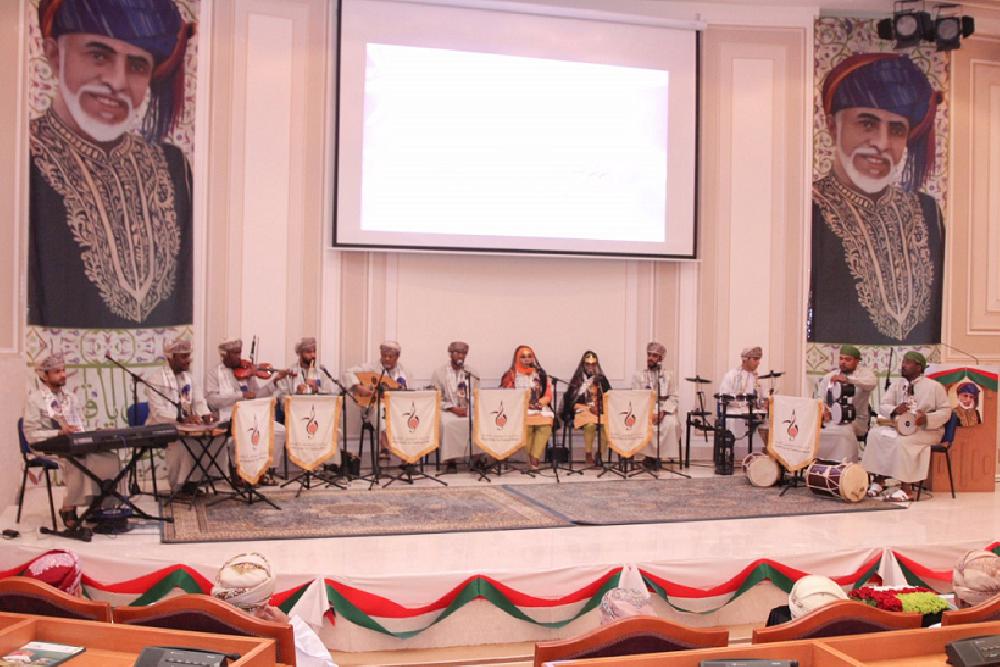
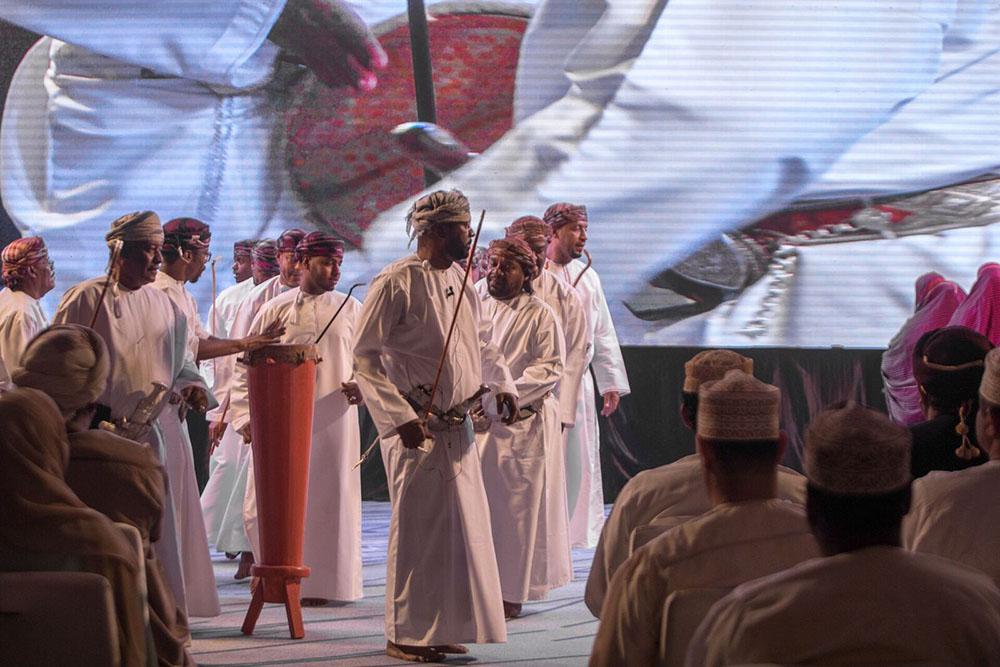
Oman Centre for Traditional Music was established on 1 January 1984 after the implementation of the Omani Traditional Music Collection and its documentation during 1983-1984, which was directed by His Majesty Sultan Qaboos bin Said.
The center specializes in collecting, documenting and preserving traditional Omani music. It tracks the musical arts in the field to identify its origins, roots and development through studies and research. It also publishes studies, researches and publications related to the Center's work. It seeks to spread musical awareness in the field of traditional singing and dance, in addition to the preparation of Omani musical cadres that are ready to participate in the musical works related to the Center and radio and television.
One year after the implementation of the traditional Omani music collection and documentation project, the Ministry of Information established Oman Center for Traditional Music in 1984. On the occasion of the 15th National Day in 1985, a concert was held under the patronage of His Majesty Sultan Qaboos bin Said. The London Symphony Orchestra, led by John Jordes, presented the first symphony based on traditional Omani music: Oman Symphony, Omani symphonic Dances (1.2.3) by musician Aziz Al-Shawan and the symphonic sequence "Omania" by Dr. Youssef Shawqi Mustafa.
The Ministry of Information inaugurated the project of collecting and documenting traditional Omani music under the supervision of Prof. Dr. Youssef Shawqi Mostafa in 1987. It included most of the Sultanate's towns in 1983. Field collection and documentation was completed in the following years. The results of collection and field documentation include:
The establishment of an archive of traditional Omani music includes hundreds of audiovisual documents (audio, video and photographic recordings) that document the patterns, songs, rhythms, names and practices of Omani folk songs in most of the Sultanate's towns from Musandam Governorate to Dhofar Governorate in the south.
Preparing researches, studies and publishing various musical publications (books, CD / DVD) in Arabic and other languages. The Center's publications are the primary source from which interested people draw their knowledge of Omani traditional music.
Scientific conferences and symposia: Under the patronage of His Highness Sayyid Faisal bin Ali, Minister of National Heritage and Culture, the Center held the first scientific symposium on Omani traditional music in 1985, in which more than 40 scientists participated in various branches of musical sciences. On this occasion, the first postage stamp was issued for Omani traditional music.
Under the patronage of His Excellency Sayyid Ali bin Hamoud Al Busaidi, Minister of Diwan of the Royal Court, the Center organized the International Forum of the Oud 2006 on the occasion of Muscat the capital of Arab culture, in which many Oud specialists participated, including musicians and manufacturers from different countries of the world.
In 2013, His Majesty Sultan Qaboos bin Said issued the Royal Decree No. (24/2013) which transferred the center from the Ministry of Information to the Sultan Qaboos High Center for Culture and Science in the Royal Court .
Oman Center for Traditional Music continued its artistic and scientific activities. In cooperation with the Arab Music Society of the League of Arab States, it organized the first and second forums for Arab musicians in 2014 and 2015. A number of new works have also been implemented, such as:
- Establishment of the Oman Center for Traditional Music Band
- Opening the Omani Music House
- Preparing a hall for musical activities
- Preparing and publishing audiovisual studies,
- Transferring audio and video documents and converting them to the digital system in preparation for archiving them electronically
- Establishing a cultural library and applying an electronic indexing system for its contents
- Production of documentary films about Omani traditional music
- Documenting some traditional music styles in a video clip mode
- Continuing field collection and documentation (Individual and team practitioners inventory project).
- To preserve cultural identity of Omani traditional music and its artistic and aesthetic characteristics, maintain its practical and oral knowledge holders, make them members in the Omani music house and benefit from their experiences and knowledge.
- To monitor collection and field documentation in various governorates, conduct scientific music studies, and monitor social, cultural and artistic developments affecting the practice of traditional music such as the reasons for continuity or extinction.
- To practice music through the members of the Omani Music House and the Music Center team as a technical platform that gathers the talented Omani artists and performers in the fields of playing and singing.
- To organize courses and workshops for young musicians, talented members and train them on performing Omani music, and developing theoretical and applied musical knowledge and skills.
- To activate the spirit of creative competition in the various fields of Omani scientific and artistic music through Oman Center for Traditional Music Award in the field of preservation and maintenance of Omani music.
- To develop Omani competencies capable of preparing scientific studies and research in various aspects of traditional Omani music, participate in local and international conferences and seminars, and publish their studies in Arabic and foreign languages in print, audio and visual versions.
- To produce documentary films, programs and musical concerts, broadcast them and publish them by different means locally and internationally.
- To manage audio and video documents and their data and information through various means to ensure their preservation, safety and utilization.
- To establish specialized musical groups and teams, as well as various musical activities and events such as evening activities, competitions, conferences, festivals and seminars.
- To work with Arab and international musical centers and organizations, develop relations, organize and host cultural, scientific and artistic events to achieve common goals.