
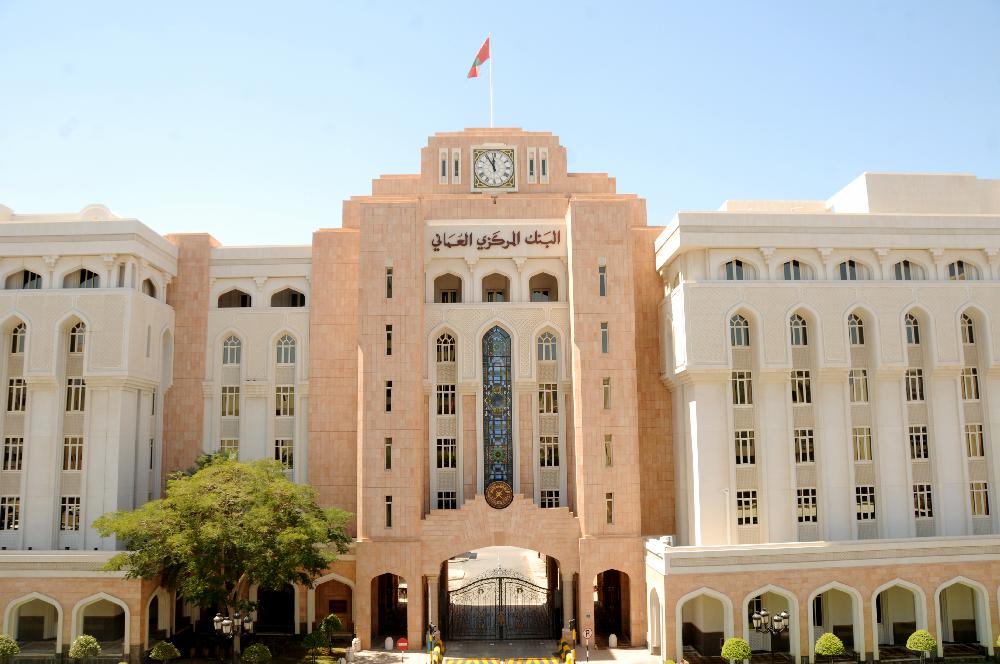


Speaking on 23 February 2020, His Majesty Sultan Haitham bin Tarik identified the pillars of future economic development in the Sultanate of Oman, drawn down from the vision of ‘Oman 2040’ which outlines the Sultanate of Oman economic, social and cultural objectives in the coming years. “The past five decades have witnessed the transformation of our country into a modern state, advanced in its infrastructure. The coming stage will be a crucial one as we drive forward the development of Oman,” he said, adding that its goal would be to create a level of prosperity that notwithstanding domestic and global challenges, would meet the highest aspirations of Omani society and particularly of upcoming generations.
The Economic Foundations of The Sultanate of Oman in The Coming Phase:
1.A restructured state administrative apparatus.
2. Streamlined government procedures.
3. A close review of government decision-making mechanisms.
4. Optimal redirection of financial resources with a view to reducing indebtedness, raising revenue, achieving financial balance, promoting economic diversification, achieving sustainability for the national economy, and development of regulations and legislation relevant to the above objectives.
5. Updated labour legislation, mechanisms and work programmes.
6. An overhaul of state companies with a view to raising performance and efficiency levels.
7. A focus on performance, integrity, transparency and accountability in governance.
8. Greater efficiencies in the SME and entrepreneurial business sector by way of:
- A focus on projects demonstrating innovation or engaging with artificial intelligence or advanced technologies.
- Training and empowerment to encourage job entrants to take advantage of the opportunities offered by this sector.
9. Development of a comprehensive national employment framework that focuses on:
- Improving the work environment in both public and private sectors.
- Reviewing and restructuring employment systems in the government sector.
- Adopting new labour systems and policies that enable the government to make the most of national resources, expertise and competencies.
- Absorbing the largest possible number of young people into the labour market.
The state budget for 2020 estimated total government revenues at RO10.7 billion, with the price of oil at US$58 per barrel, and estimated government budget spending in the region of RO13.2 billion. The general framework of the budget seeks to achieve a set of goals and priorities, foremost among which is financial sustainability, so as to enable the national economy to meet its targeted growth rate, as well as domestic and foreign investment goals; to establish economic diversification programmes; and to incentivise the private sector to step up its role in driving the economy and generating employment. The fiscal year 2020 is the last year of the Ninth Five-Year Plan (2016-2020), during which 5 major sectors became the focus of economic diversification plans: the manufacturing sector, transport and logistics, tourism, fisheries and mining.
Financial sustainability is one of the Objectives of the 2020 General Budget, to enable the national economy meet its targeted growth rate, through:
- Fiscal control and control of deficit rates.
- An increase in the contribution of non-oil revenue sources, achieved by expanding the national production base.
- Extending procedures that rationalise public spending and increase efficiency.
- Identifying innovative funding approaches to pay for government projects and services.
- Working to develop the system and mechanisms of government procurement.
Continuing to stimulate the national economy is also an objective 2020 General Budget of the through:
- Completion of infrastructure projects that support economic growth.
- Assigning priority in project implementation to those that serve economic and social goals.
- Speedy commissioning of completed projects to accelerate their contribution to the benefit of society and the economy.
- Completing the digital transformation process and ramping up the processing of government transactions related to the issuance of approvals and permits.
- A focus on the maintenance of development projects that protect and exploit the achievements of the past decades to best effect.
- Raising the efficiency and enhancing the performance of state-owned economic institutions.
- Expanding the role of the private sector in the provision of valuable products and services.
2020 General Budget also aims to maintaining basic services at their current level, attracting more local and foreign investment and incentivizing the private sector to provide more useful job opportunities.
During 2020, the Central Bank of Oman announced a commemorative issue of the RO50 denomination note, marking the 50th anniversary of the launch of the Sultanate’s Modern Renaissance and to commemorate its founder, His late Majesty Sultan Qaboos bin Said bin Taimur. The unparalleled achievements of Sultan Qaboos over the past half century have restored the Sultanate to its prominent place in world affairs.
The Central Bank of The Oman also issued a silver commemorative coin to mark the 30th anniversary of the opening of the Sultan’s Armed Forces Museum.
The Capital Market Authority (CMA) has worked, as legislator and regulator, to achieve for the capital market and insurance sectors the highest economic interests of the State. It strives to protect all parties interacting with these sectors, guided by a pursuit of justice, integrity and transparency that fulfils international best practice standards. It monitors the legislation governing the two sectors, issuing new laws or amending or replacing existing legal instruments to keep pace with current requirements and accommodate developments adopted by accredited global organisations.
The Commercial Companies Law enacted pursuant to Royal Decree No 18/2019 streamlined legislation to greater compatibility with current capital market requirements, which demand flexibility and robustness in the Omani markets as a booster to investor confidence. Under the new law, the Capital Market Authority will establish the governance principles applicable to public shareholding companies and companies in which the government holds a stake, while leaving to the Ministry of Commerce and Industry the principles applicable to other corporate entities. As a prelude to the introduction of compulsory health insurance for private sector employees, visitors and residents of the Sultanate of Oman, the Capital Market Authority (CMA) in March 2019 rolled out the new unified health insurance project. This initiative represents a step towards catching up with the remarkable growth spurt in health insurance products of the past few years, which now constitute 33% of the overall country-level insurance portfolio in 2018.
The Most Significant Financial, Economic and Monetary Achievements of 2021:
A decrease in the public debt-to-GDP ratio to the 68% level, as compared with the prior estimate for the year (83%).
A drop in the oil price breakeven point to US$60 per barrel for the five-year period 2021-2025, as compared with the figure of US$80 per barrel for 2016-2020.
A revision by the major credit rating agencies in 2021 of their outlook for the Sultanate to ‘Stable’ and ‘Positive’ , reversing a continuing decline that began in 2014.
Improved Financial Indicators :
The estimated deficit decreased from RO4.8 billion prior to government mitigation measures to RO1.2 billion for 2021, a satisfying drop of 75%.
A decrease in the annual deficit figure from 15.5% of GDP in 2020 to 3.8% in 2021 Public spending control achieved, notwithstanding financial challenges that required the following exceptional expenses:
Appropriation of RO53 million to handle the outbreak of coronavirus. The absorptive capacity of higher education institutions raised to a new ceiling of 31,000 places. Costs associated with employment and associated training programmes. Settlement of RO418 million in financial arrears from previous years. Settlement of RO1.2 billion in financial dues to private sector companies up to end of 2021. Allocation of RO200 million for repairs to the damage caused by hurricane Shaheen. Government’s contribution to oil and gas sector capital and operating expenses arising from operational processing delays by the Energy Development Company of The Sultanate Oman.
Source by: Oman Annual book 2021