
/ONA/
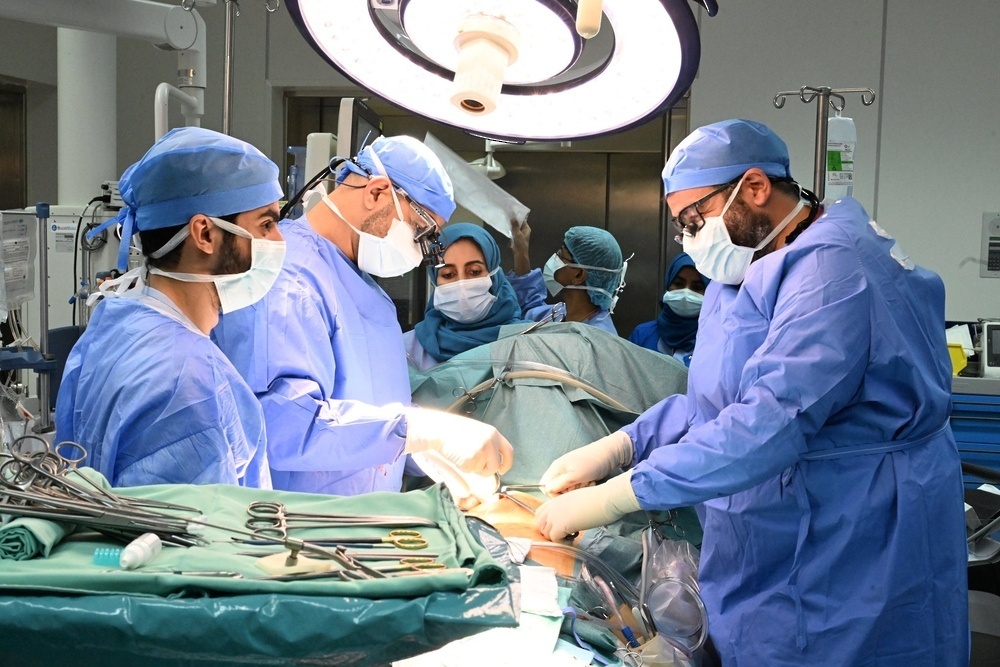
The National Heart Centre at the Royal Hospital, in cooperation with the Oman Centre for Organ and Tissue Donation and Transplantation, has successfully performed the fourth heart transplant in the Sultanate of Oman, alongside four organ transplant procedures using organs donated by a patient who was declared brain-dead, helping to save the lives of four patients.
This significant achievement reflects the Royal Hospital's high level of competence and preparedness, the integrated coordination with the government and military healthcare systems in the Sultanate of Oman and the University Medical City, and the progress made by national specialised healthcare services in the field of organ transplantation. It also underscores the capabilities of national medical professionals in performing highly specialised and complex procedures.
Dr. Najeeb bin Zahran Al Rawahi, Director of the National Heart Centre at the Royal Hospital, told ONA that the success of these complex procedures reflects the Centre's commitment to the highest internationally recognised standards of quality and safety in delivering advanced cardiac care. He stressed that heart transplantation is not merely a highly sophisticated surgical intervention, but rather an integrated system governed by rigorous protocols for assessment and follow-up, as well as a comprehensive approach to total quality management in healthcare.
He added that this significant achievement is attributable to the unique coordination and integration among the various subspecialties within the Centre, including cardiac surgery, heart failure, anaesthesia and cardiac intensive care teams, as well as perfusion and cardiac rehabilitation specialists. He explained that this collaboration among medical and allied healthcare teams is the cornerstone of achieving the best possible patient outcomes and ensuring the sustained success of the National Heart Transplant Programme.
He affirmed that sustainability and operational readiness are fundamental pillars of successful transplant procedures, noting that the Centre operates around the clock to receive urgent notifications and activate rapid-response teams. It also applies the latest medical technologies and protocols in post-transplant patient follow-up, rehabilitation care and comprehensive immunological management, thereby safeguarding transplanted organs and supporting patients in achieving full and sustained recovery.
For her part, Dr. Noreen bint Yousuf Al Balushi, Director of the Oman Centre for Organ and Tissue Donation and Transplantation, told ONA that the recurrence of such an achievement within a short period reflects the advancement of the organ donation and transplantation system in the Sultanate of Oman to a more mature, organised and prepared stage.
She stressed that this is no longer an isolated or exceptional success, but rather the result of an integrated institutional process that begins with the early identification of potential donors, continues through accurate medical assessment and the preservation of organ viability, and concludes with rapid coordination among organ retrieval and transplant teams across a number of hospitals and medical specialties.
She added that this achievement reflects the development of a culture of teamwork among intensive care units, organ donation teams, laboratories, logistics services, and heart, liver and kidney transplant teams. This ensures the greatest possible benefit from every donation case and transforms a painful human loss into new opportunities for life for a number of patients.
She explained that saving four patients through a single donor requires the integration of numerous factors, foremost among them the accurate diagnosis of brain death, the early identification of the potential donor, and the optimal preservation of organ function in intensive care until the time of retrieval.
She noted that success also depends on the rapid medical and laboratory assessment of organs, the selection of the most suitable patients from waiting lists, and the performance of compatibility tests, in addition to precise and simultaneous coordination among heart, liver and kidney teams, anaesthesia and intensive care units, laboratories, blood banks and transport services. She stressed that the profoundly humanitarian decision of the donor's family to consent to organ donation at an extremely difficult moment was the foundation that made it possible to save these lives and give four patients and their families a new beginning.
For her part, Dr. Amina bint Sulaiman Al Busaidi, Consultant in Heart Failure and Head of the Heart Transplant Programme, said that establishing a national heart transplant programme represents an important medical achievement. She noted that the Sultanate of Oman has succeeded in building a sustainable heart transplant programme through the efforts of medical professionals at the National Heart Centre and the participation of a multidisciplinary team.
She added that, within a short period, the programme has succeeded in developing an integrated system encompassing the careful selection of patients, highly efficient preoperative management, and long-term post-transplant follow-up, thereby helping improve medical outcomes and enhance patients' quality of life.
She stressed that teamwork and integration among the various specialties have formed the true foundation of the programme's success, expressing her aspiration to continue developing the programme in line with international best practices and in a manner that serves patients in the Sultanate of Oman over the long term.
Dr. Qasim bin Saleh Al Abri, Senior Consultant in Cardiac Surgery at the National Heart Centre, told ONA that heart transplantation is among the most complex specialised procedures and requires a high level of preparedness, beginning with the identification of a suitable donor, followed by assessment of the heart and preservation of its function, through to organ retrieval, transportation and transplantation.
He added that the success of such procedures depends on seamless collaboration among cardiac surgery, anaesthesia, intensive care, nursing and laboratory teams, as well as other supporting teams. He noted that the successful completion of the fourth heart transplant confirms that the National Heart Transplant Programme is beginning to move beyond the establishment phase towards continuity and the accumulation of expertise.
He pointed out that true success is not measured by the performance of a single procedure, but by the system's ability to carry out such complex procedures repeatedly, safely and efficiently, while maintaining medical, technical and logistical readiness.
For his part, Dr. Waleed bin Amer Al Badi, Consultant in Cardiac Surgery at the National Heart Centre, told ONA that the repetition of these procedures has helped clarify roles, accelerate decision-making and improve coordination between heart retrieval and transplant teams. The teams have also become better able to anticipate challenges and address them in a timely manner.
He added that accumulated experience is reflected not only in the surgical aspect, but also in patient selection, pre-transplant management, postoperative care, and the management of immunosuppressive medications and potential complications. He stressed that this accumulated expertise provides the true foundation for building a sustainable and safe national programme.
He affirmed that the Sultanate of Oman has today reached an advanced and promising stage in the field of organ transplantation, with a strong national base of medical and technical expertise, growing experience in the transplantation of several organs, and a regulatory framework that continues to develop.
He added that building a sustainable system requires continued development of human resources, expansion of training programmes, strengthening of infrastructure, activation of reporting mechanisms for brain-death cases across all governorates, and greater public awareness of the importance of organ donation.
He noted that this achievement represents an important step on a long journey and sends a clear message that the Sultanate of Oman has the capability to build an integrated national programme that reduces the need for treatment abroad and provides patients with advanced specialised services within the country, in accordance with the highest medical and ethical standards.
He explained that every successful donation directly contributes to reducing waiting lists and giving a number of patients a new chance at life. However, the level of need remains greater than the number of available organs. He stressed that achieving a broader qualitative advancement requires increasing the number of donors, whether following brain death or through living donation, in accordance with medical, Sharia and legal regulations.
He explained that this requires strengthening the identification and reporting of brain-death cases in all hospitals, providing trained organ donation coordinators, supporting intensive care units, expanding organ transplant programmes, and continuing to develop laboratories, professional capabilities and infrastructure.
He affirmed that public awareness remains the cornerstone of the entire system. Every individual who registers a wish to donate, and every family that consents to donating the organs of a deceased loved one, may help save several lives. He noted that genuine progress will be achieved when organ donation becomes firmly established as a societal culture, as one of the highest forms of humanitarian giving and an extension of life beyond death.
The Royal Hospital, in cooperation with the Oman Centre for Organ and Tissue Donation and Transplantation and healthcare institutions across the Sultanate of Oman, continues its efforts to develop the organ transplantation system and raise public awareness of the importance of organ donation following brain death. Such donation represents genuine hope for patients awaiting a new chance at life and embodies a noble humanitarian mission that contributes to saving lives and improving quality of life.
It is worth noting that a total of 35 organ transplant procedures were performed between 1 January and 28 July 2026. These comprised 23 kidney transplants, including 15 from living donors and eight from brain-dead donors; nine liver transplants, including six from living donors and three from brain-dead donors; and three heart transplants, all from brain-dead donors. A total of 50 corneal transplant procedures were also performed during the same period.