



/ONA/
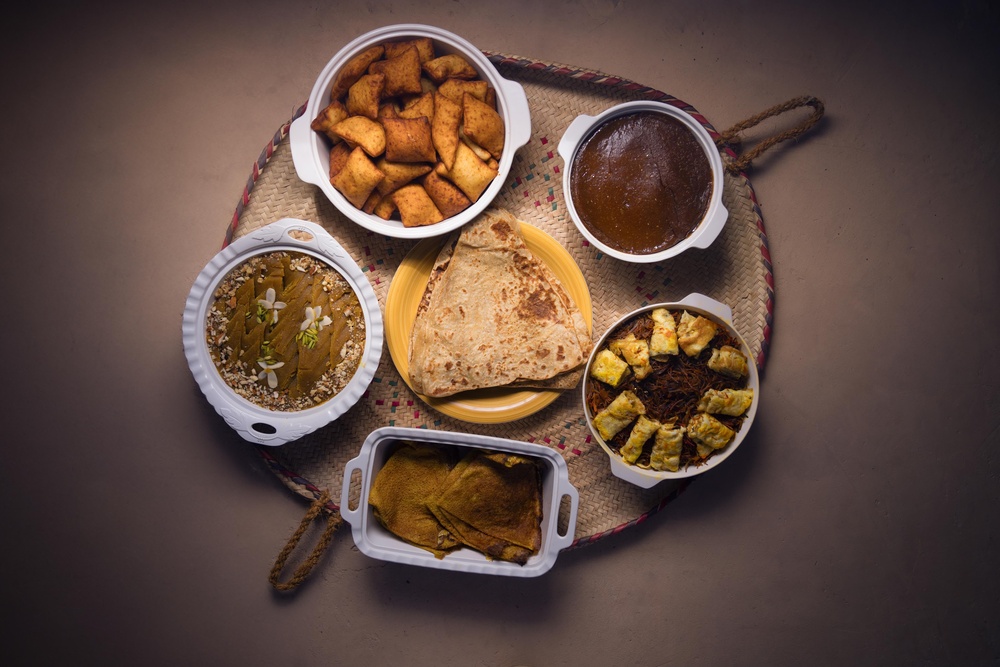
Omani photographer Haitham Al Farsi’s film “Sufrat Ramadan fi Sur” (Ramadhan Table in Sur) has won the Best Film Award in the “Urban-Rural Connectivity” category as part of the 2026 Food Film Menu competition, organised by the International Institute of Gastronomy, Culture, Arts and Tourism (IGCAT), headquartered in Barcelona, the Kingdom of Spain.
accolade was achieved in an international competition featuring more than 100 films from around the world competing in 14 categories. The winning film offers a visual and cultural journey into the Ramadhan dining experience in the Wilayat of Sur, showcasing aspects of the customs and traditions associated with the holy month of Ramadhan, as well as the dishes and social practices that characterise the Sur table, reflecting the depth of the wilayat’s cultural heritage and historical distinctiveness.
The film also highlights the close connection between the culinary heritage of the Wilayat of Sur and its rich maritime history, including the maritime and commercial activity and cultural exchange it witnessed over the centuries with a number of ports and communities. This interaction influenced various aspects of the local cuisine, including its ingredients, flavours, preparation methods and presentation, making the Sur table a living testimony to the history of the place and its social and cultural memory.
The award gains significance amid growing global interest in food tourism, culinary arts and experiential tourism. Local cuisine has become an important means of discovering destinations and engaging with their cultures and communities. The tourism experience is no longer limited to visiting sites and landmarks, but also encompasses the authentic experiences visitors encounter, which reflect the identity of a place and provide them with an opportunity to understand its culture, stories and ways of life.
In this context, Amira bint Iqbal Al Lawati, Advisor to the Minister for Tourism Experience Development at the Ministry of Heritage and Tourism, said that this achievement comes within the framework of the Ministry’s programme for developing food tourism and culinary arts in The Sultanate of Oman. Through the programme, the Ministry works to highlight Omani culinary heritage and utilise it to develop authentic tourism experiences connected to the identity, culture and history of places and their local communities, while also strengthening The Sultanate of Oman’s presence on international platforms and initiatives specialising in this field.
She explained that, within the framework of its cooperation and relationship with the International Institute of Gastronomy, Culture, Arts and Tourism (IGCAT), the Ministry works to benefit from the opportunities and platforms provided by the organisation to promote Omani cuisine, culinary arts and related experiences internationally, and to encourage Omani talents, photographers and content creators to present stories of Omani flavours through creative approaches capable of competing and reaching global audiences.
She added that the Ministry supported photographer Haitham Al Farsi in participating in the competition with the film in the “Urban-Rural Connectivity” category, and followed up on the submission process and reviewed the work to ensure compliance with the competition’s requirements and criteria, leading to its participation in the international competition. She noted that winning among more than 100 films from around the world reflects the authenticity and richness of Omani content and its ability to compete internationally when presented through an integrated visual, tourism and cultural narrative.
She affirmed that the Ministry views films and visual content as important tools for supporting the food tourism and culinary arts programme, given their ability to document culinary heritage and convey its associated stories to audiences, while transforming elements of local culture into inspiring content that encourages people to discover destinations, experience them and engage with their communities.
For his part, photographer Haitham Al Farsi said that the film tells the story of one of the Omani dishes associated with the Ramadhan table in the Wilayat of Sur through an integrated journey that begins with the housewife and the stages of preparing the dish at home, followed by the fisherman’s journey from the early morning hours to obtain fresh fish, and the spice trader, highlighting spices as an essential element of the local flavour, before culminating in the Ramadhan table and the gathering of family members around the iftar meal. Through this journey, the film seeks to present Omani cuisine as part of the story of the place, its customs and traditions, and the way of life of its community.
He added that this achievement provides a moral boost to produce more works documenting Omani culinary heritage, which is rich in a wide variety of authentic dishes and the stories associated with them, particularly in light of the existence of the Omani Cuisine Documentation Book published by the Ministry of Heritage and Tourism, which serves as a reference and encyclopaedia of Omani dishes that deserve to be highlighted and presented to the world through creative approaches that reflect their authenticity and the distinctiveness of Omani culture.