

Within the framework of the International Astronomical Search Collaboration (IASC), and in a notable global astronomical achievement, an employee of the Astronomical Observatory at Royal Court Affairs succeeded in detecting two asteroids located in the asteroid belt of the Solar System. As a result, he received two official certificates from the initiative sponsored by the United States National Aeronautics and Space Administration (NASA), alongside a number of specialised international astronomical bodies.
The employee, Abdullah bin Mohammed Al Hajji, analysed images captured by the Pan STARRS 2 telescope at the Haleakala Observatory, located in the US state of Hawaii. The observatory is equipped with an astronomical camera whose sensitivity is regarded as among the largest digital astronomical cameras. Al Hajji used the specialised astronomical software required for such discoveries to examine four images of the same region of the sky taken in successive time intervals. The task of the image analyst involves processing these images and identifying any moving object within the four frames. When such an object is detected, it is first compared with known celestial bodies and, if confirmed to be previously undiscovered, a report is submitted to the relevant astronomical authorities.
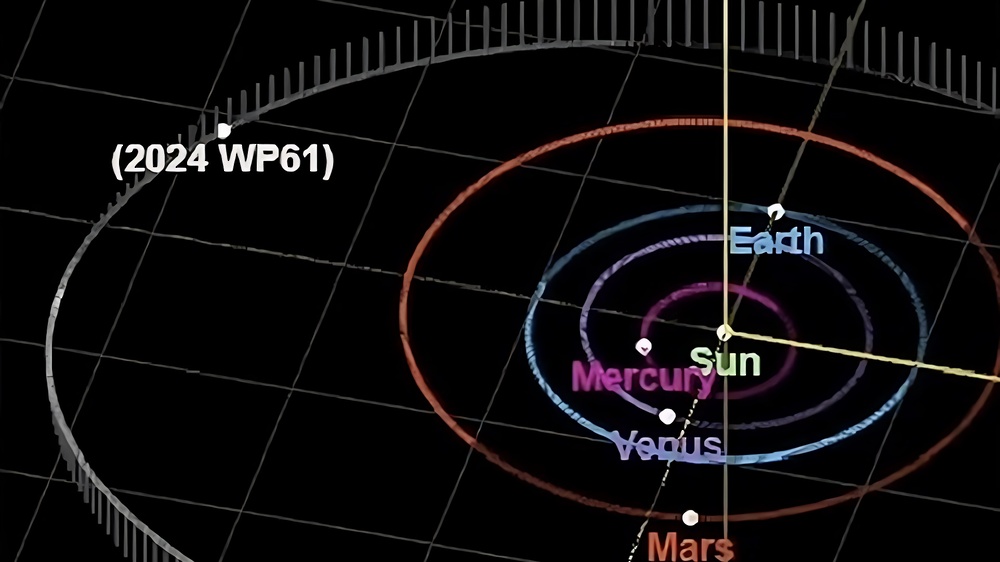
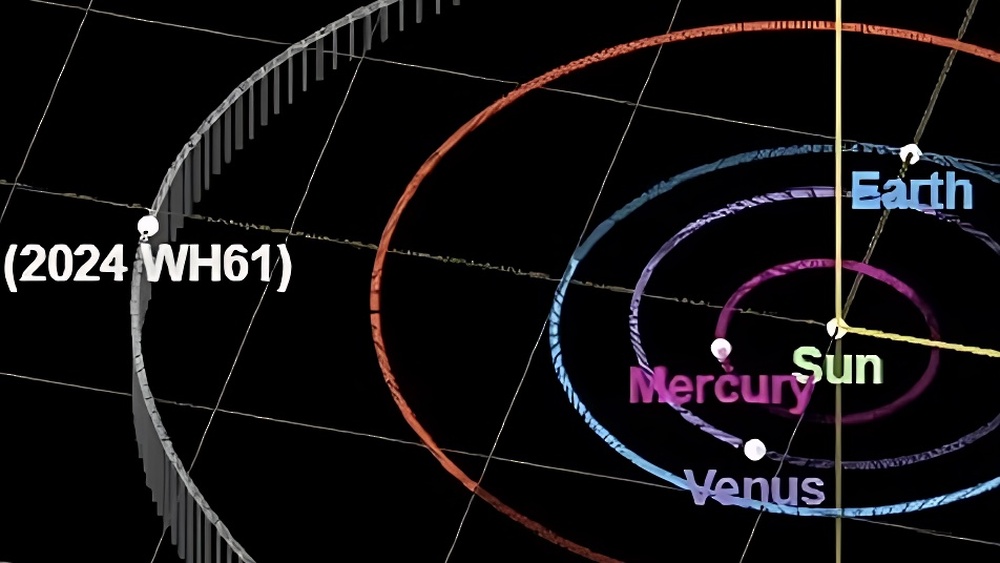
After a set of images had been analysed and reviewed by the organisation, the discovery of the two asteroids was confirmed and they were assigned the provisional designations (2024 WH61) and (2024 WP61). Following this discovery, Al Hajji received two provisional discovery certificates for the asteroids. The two objects will retain these designations for several years until they are observed extensively to determine their orbits with precision. Thereafter, each asteroid will be given its permanent name, and the discoverer will be officially announced by the International Astronomical Union, which will subsequently request that the two asteroids be named.
Regarding this achievement, Abdullah Al Hajji stated that the discovery occurred during his participation in observation activities through international observatories as part of a public citizen science project for members of astronomical organisations and institutions, as well as school and university students. The initiative aims to disseminate astronomical knowledge and to assist astronomers in achieving such significant scientific contributions.
Al Hajji explained that these observatories provide sets of images amounting to up to twenty collections per month, after which an observation report is submitted to the International Astronomical Search Collaboration (IASC) for evaluation and to ensure that there is no match with previous discoveries. He added that the analysis process and verification of the discovery require a lengthy period to confirm orbital parameters. Observation of the two asteroids took place in November 2024; however, official recognition requires an extended period following in depth studies for verification and confirmation. He further noted that he has approximately twenty other recorded provisional discoveries that remain under verification.
First discovered asteroid: 2024 WH61
It lies within the asteroid belt of the Solar System and completes one orbit around the Sun every four years at a distance of approximately 2.4 astronomical units from the Sun. It follows a relatively elliptical orbit and is inclined to the ecliptic plane by 8.5 degrees. At the time of its discovery, it had an apparent magnitude of 21.
Second discovered asteroid: 2024 WP61
It lies within the asteroid belt and completes one orbit around the Sun every five years at a distance of approximately 3.1 astronomical units from the Sun. It follows a relatively elliptical orbit and is inclined to the ecliptic plane by seven degrees. At the time of its discovery, it had an apparent magnitude of 21.