
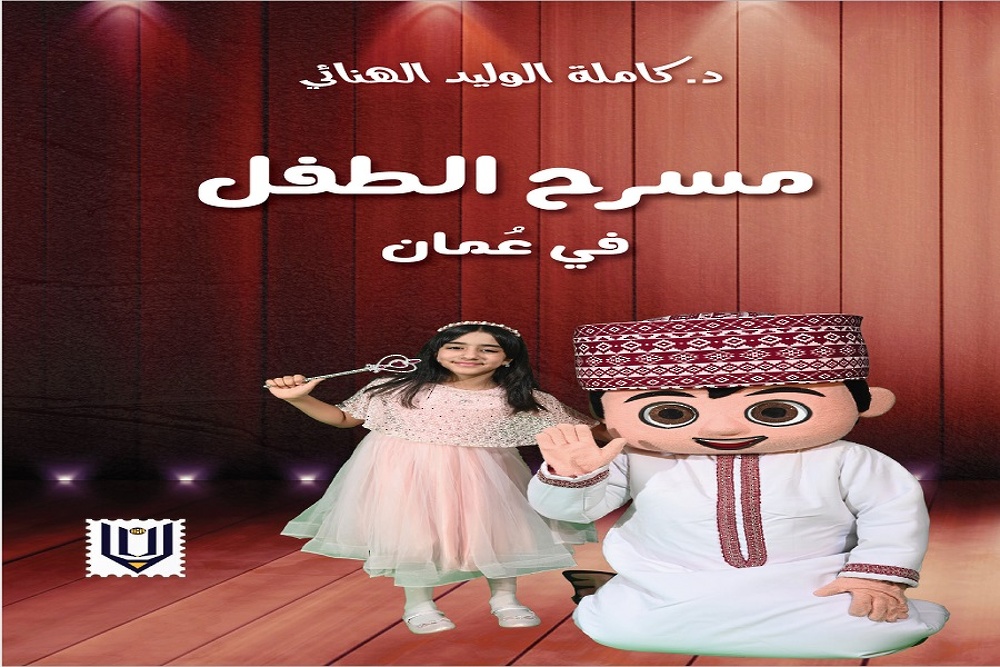
Muscat, November 2 (ONA) - The book “Children's Theatre in Oman” by Dr. Kamilah bint Al-Waleed Al-Hinaiya, published by Luban, provides an in-depth study dealing with the process of this creative art and its challenges, with references to dispersed efforts that have missed out organization and systematic continuity.
Al- Hinaiya presents her book to her father, Al-Walid bin Zahir Al-Hinai, considering that his great loss entrusted her with the trust of continuing the giving and reclaiming his sentence “He who loves me learns”. she says: “Your sentence still resonates in my ears, and your constant encouragement for me and my brothers to seek knowledge, and what you inscribed with your tenderness and sublime of your mind, was enough to aspire to be some of you, in love with Oman and its people.”
Dr. Kamila Al-Hinaiya divides her book into four chapters divided into sub-sections, beginning with the first chapter “Child Theatre: Term and Concept”, then “The Importance of Arts and Theatre in Children's Lives” and “The History of Child Theatre in the Sultanate of Oman”. It concludes in the fourth chapter by presenting the experiences of those working in the children's theatre in the Sultanate, in acting and directing, in addition to the experiences of those working in the artistic and aesthetic elements of this theatre.
In the introduction to the book, the author believes that when we talk about theatre and the child's attachment to it and its various arts that it brings together under its umbrella “performing arts”, we find that children, from their early ages, play games of a dramatic and theatrical character, games that include simulation, imitation, dialogues, movement, voices and emotions. These games may be individual, which the child plays alone, or joint, or group with another child or group of children, through these games the child expresses himself, discovers the world around him, and develops his social relationships.
She indicated that in her book she sought “an answer to some of my questions and those of researchers and those interested in child theatre in the Arab world in general, and in the Sultanate of Oman in particular,” adding that she did not find “difficulty in answering the theatre question inasmuch as it is the absence of references that can provide answers about its existence, its role, and its activities.
The author refuted the difficulties that they lie in “little information, scarce sources, and so on, which confirms that we have not yet begun to establish a theatre for the children, or to take his hand to be a true cultural incubator, and we are in the year 2020. Talking about this has become immersed in the norm of human civilization, but this does not mean that the attempt has to stop, but rather that we challenge more, as the founding role is a duty. Perhaps this book constitutes an initial effort for the efforts that come after it to build on it and go in greater strides, to introduce children's theater in the Sultanate.
She summarized the focus of her work in that she sought to trace the history of the emergence of the Children's Theatre in Oman, and the challenges that faced this theatre during the past five decades, stressing that this “pushes for more review, and moves towards taking care of it, and placing it within our cultural locomotive, as we are moving towards Oman's future vision 2040.
In the introduction to the book, Dr. Kamilah pointed out that the Sultanate has come an important way in the field of child care, noting that “there is a great and clear official interest in the Omani child, especially in the social, health, educational and legal fields.” She said that there are important articles in the (Omani Child) Law issued by Royal Decree No. (22/2014) related to the child's cultural rights. Culture - according to the law - in its various fields, including theatre, is one of the basic rights of children, as is their right to social and health care and others.
Articles (12 and 13) of the Omani Child Law also affirmed the right of the child to express his opinion by word, writing, deed, printing, art, or any other medium he chooses, as well as the child's right to knowledge, use of means of innovation and creativity, and to participate in entertainment, cultural, artistic and scientific programs. With regard to cultural rights (Articles 39-42), the state guarantees by all available means the fulfillment of the child's cultural needs in its various fields of literature, arts, knowledge, human heritage, modern scientific progress and linking them to the values of society, and for this it undertakes the establishment of libraries and clubs for children.
(ONA)