
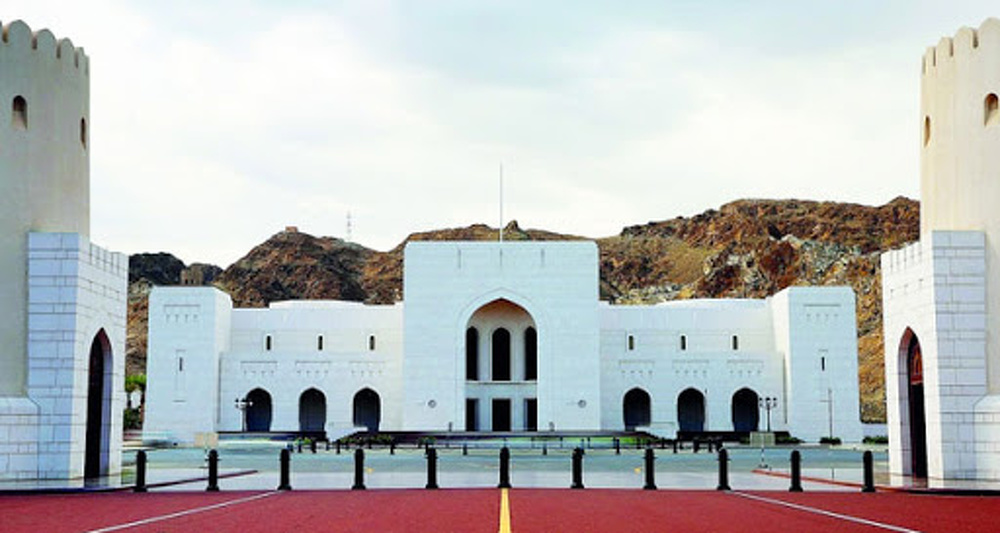
Muscat, July 29 (ONA) - The National Museum celebrates tomorrow its fourth anniversary tomorrow since its opening in front of the general public, which was on July 30, 2016. These four years have been full of accomplishments and successes of which everyone who has worked at the museum has been proud.
During the past year, work in the museum witnessed an intensification in the context of the program of exhibitions and shows at the local and international levels, by hosting two international exhibitions and four local exhibitions. The most prominent of which are: the “Hermitage Day in Oman” and “Saving the Past for the Future: Preserving and Conserving the National Museum's Collection”.
As for the external participation in the context of the so-called cultural diplomacy, during the year 2019, “Oman Day” exhibition and activities were organized in the National Museum of Fine Arts in the Republic of Belarus, in addition to the inauguration of “Oman Corner” in the Belarusian State Library. The library of the Omani Centre for Culture and Arabic Language of the Belarusian State University was also provided with the most prominent Omani publications and books. The National Museum had a presence and participation in the exhibition “Future Partnership: Treasures of National Museums along the Silk Road” organized by the China National Museum.
In the context of international cooperation, last year witnessed the signing of a number of memoranda of understanding in the cultural and museum fields with prestigious museum bodies: The General Directorate of Antiquities and Museums of Syrian Arab Republic, the National Museum of Nur Sultan of the Republic of Kazakhstan, and the National Historical Museum of the Republic of Uzbekistan and the National Museum of Nepal.
The National Museum also adopted an initiative to save the threatened cultural heritage in the sisterly Syrian Arab Republic, where a contract was signed to preserve and maintain more than 175 Syrian museum pieces that were damaged during the crisis years.
In the field of international memberships, the National Museum was unanimously accepted as a member of the Asian National Museums Association, making it the first museum in the Middle East or the Arab world to be accepted into this association.
In the context of developing museum collections, the possessions were increased through the acquisition of (643) items through purchase, gifting, loaning, commissioning, in addition to preserving (706) items, the most prominent of which is the treasure of Sinaw, which is the largest treasure of Islamic coins discovered in Oman to date.
The National Museum adopted the priority in the professional empowerment of young Omani cadres, through the continuation of specialized training and professional qualification inside and outside the Sultanate, in cooperation with the best museums and cultural institutions worldwide, in order to achieve a recognition of best practices and international standards in various fields of museum work. In this regard, a number of the museum’s employees was sent for abroad training courses besides the intensification of the participation in the specialized courses inside the Sultanate. In general, a total of (24) employees benefited from (24) courses.
On the level of achieving financial sustainability, last year witnessed the growth of museum revenues by (16%) compared to (2016). In addition, self-sufficiency was achieved in operating the learning centre at the National Museum.
During 2019, the museum received 100 thousand and 864 visitors, among them 19 thousand and 884 beneficiaries of the programs and activities presented by the museum represented by the Learning Centre, an increase of (15%) compared to 2018. The number of activities organized by the centre reached about (540) programs and activities inside the museum and in the various governorates.
On the other hand, the membership card of the Friends of Oman Museums was launched with an initiative led by the National Museum, which aims to provide a set of distinguished services for its holders within the National Museum or with the contributing institutions, which are the museums of the Ministry of Heritage and Culture and the Royal Opera House. This card, which is renewed annually, is specifically designed to bring added value to people who frequently visit the museum. The number of registered members during the year (2019) was about (31) members.
It is worth noting that the National Museum is considered the most prominent cultural monument in the Sultanate of Oman. It is dedicated to highlighting the treasures of Oman's cultural heritage, from the advent of the human influence in Oman to the present day, through which we look forward to our promising future.
The National Museum was established by Royal Decree No. (62/2013), issued on (16 Muharram 1435 AH), corresponding to (20 November 2013 AD). Thus, it has become a legal personality, in line with international experiences and standards recognized in the classification of ancient museums.
The museum aims to achieve its educational, cultural, and human mission through consolidating the noble Omani values, activating affiliation, and raising public awareness among the citizen, resident, and visitor for the sake of Oman, its history, heritage, and culture, and by developing their creative and intellectual capabilities, especially in the areas of preservation of evidence, holdings, and highlighting the civilizational dimensions of Oman, by employing and adopting best practices and standards used in the fields of museum sciences.
As for the vision of the museum, it is reflected in providing leadership to the museum industry in the Sultanate, in order to achieve the desired qualitative shift for this sector.
All this is embodied in the distribution of the museum display experience in (14) halls, which includes more than (7000) of distinctive, carefully selected events, and (33) interactive digital display systems. It is the first museum in the Sultanate to include a learning centre, equipped with the highest international standards.
It is also the first museum in the Sultanate to include facilities for preventive conservation and preservation, and fully equipped laboratories. In addition, it is the first museum in the Sultanate to include an audio-visual exhibition hall with (UHD) technology. It is the first museum in the Middle East to employ the Braille system in Arabic, and the first museum in the Middle East to employ the open warehouse system.
(ONA)