
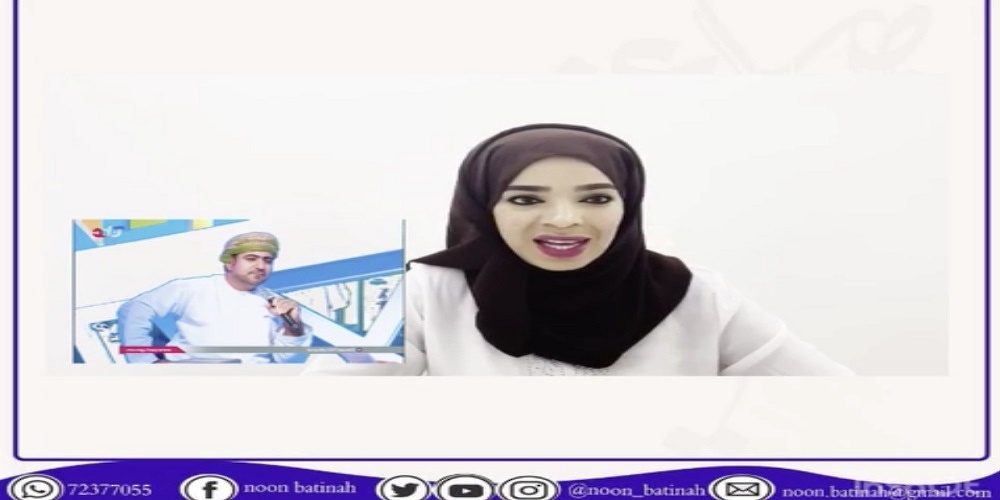
Suhar,(ONA) - The Omani Society for Writers and Literates, represented by the Committee of Writers and Literati of the Al-Batinah North Governorate, held a historic dialogue session via video conferencing entitled “The Wilayat of Liwa, Ancient History and Bright Present”, with the participation of a number of specialists and researchers.
The panel discussion included a number of work papers. The researcher Khamis Al-Maamari started from the name of the Wilayat of Liwa, as he discussed the origin of this name and explanations related to a number of cultural, humanitarian and historical events. He also talked about the history of the wilayat and its span of hundreds of years with many Omani and non-Omani cities, the importance of the historic Castle of Liwa, passing through Fazah Castle and its historical reality, which formed a unique model in historical events and facts.
Al-Maamari referred to the beginnings of documenting the history of Liwa, the events that it went through ages intertwined with cultures, the extent of the impact of mining, agriculture, and industry since the dawn of the history of Islam in this town, in addition to its strategic location and how it was a transportation station and a resource for goods coming across the seas. He also went on to talk about fishing in this town and its association with fishermen.
He also touched on the traditional arts of which the Wilayat of Liwa is famous, such as Al-Aazi, Al-Ayalah, Al-Razfah Al-Hamasiyah and Al-Malad explaining its deep roots in the wilayat. In addition, he touched on the achievements made in the modern renaissance and its impact on economic and social reality.
Dr. Huda Al-Zadjali, a researcher in the Omani history, addressed the surveys that extended to Liwa, which started from some of the nearby cities, and about the writings of travellers and explorers who wrote about Liwa especially in the modern era. In her talk, she addressed the administrative system that links the Wilayat of Liwa to Suhar, for example.
She also talked about the military fortifications and explained that the wilayat went through many wars. She further presented a detail of Al-Nabhanah and Al-Yarubah era and the connection of these two eras with this wilayat and the intertwining historical events of these two periods. She talked about the Wilayat’s association with some Omani cities and its caravans and ships which stopped in Liwa to supply, or even those trips related to Basra. She also talked about Liwa, its role in the Busaidi state, and the extraordinary articulated events it went through.
On the other hand, “Wamdha”, one of the events of the Committee of the Writers and Literati of the Al-Batinah North Governorate continued its activities. It touched the biography of the writer Ahmed bin Saeed Al Badi and discussed his historical releases that highlight his cultural presence in the Omani cultural scene. His books include: “The Story of Oman Through Time” which talks about the presence of Arabs in Oman, passing through the imams and sultans who had a prominent role in Omani history, “Stories and News that happened in Oman and Zanzibar”, “Al-Buraimi - History and Civilization” which talks about Al-Buraimi’s ancient and modern history, the customs of their people and their traditions, the historical stages that passed on Al-Buraimi Oasis, the role of the government of His Majesty Sultan Qaboos in its development, and “Al-Busaidid and Al Saud” which comes in three parts. In addition, the most important achievements of the writer Al-Badi on the cultural and literary level have been discussed.
“Wamdha”, has also touched on the biography of the novelist Dr. Fawzia Al-Badwawi, who started writing from an early age, when she was in the elementary school. She started with free association and article writing, then she focused on writing novels (in Arabic). She wrote her first novel entitled “Khattan Mitwaziyan” (Two Parallel Lines), which was published in 2016 by a Kuwaiti publishing house. Then she continued her novelist career, and in 2017 she released her second novel, “Hidhoor Min Sarab” (Presence of a Mirage) by Al Ghasham House, then in 2018 her novel “Thakirah Min Hanin” (Memory of Nostalgia) by the same publishing house.
The novels of Al Badwawi were included in the list of the ten best-selling books for 2018 at the publishing house level at the Muscat International Book Fair 2018. She continued her literary career by authoring the book “Drowned in Sin” in 2019 by Kinooz Al Ma’rifah Library, and the book has also topped the list of the ten best-selling books at the level of the publishing house at the Muscat International Book Fair for the year 2019. The book contains the stories of people who have been subjected to extortion, so its message consisted of exposing the tricks of blackmailers and educating the community about how to avoid falling victims to this electronic crime that crosses the geographical borders. Finally, she released her last novel in 2020 entitled “I don't want to grow up”. In addition to that, Al Badwawi has many societal contributions, and she has been keen to present several workshops in the art of story writing.
(ONA)