
04-05-2020 02:08 PM
Mohammed Al-Amri ... Adventure of colour and letter, clash of painting and poem ... Cultural Bulletin ...
Amman, May 4 (ONA) / Writer and artist Mohammed Al-Amri combines fine art, criticism, poetry and novel writing. In all of these, he considers himself searching for beauty, and is passionate about the details in which the whole picture of life is complete. Al-Amri balances between these works and deals with them on the basis that the poetic imagination nourishes the artistic painting, that the painting provides the poem with the harmony of colour, that the narration is the essence of life and its reflection, and that criticism is necessary to develop and enrich the creative experience.
Al-Amri, as its colour formations and climates of his texts show, is obsessed with the sky and the formations of clouds, and in it he sees shapes that mimic horses, oxen, and birds. As he was affected by Salvador Dali's experience in the early stages of his experience, he adopted nature in later stages as a basic reference for his works. Nature, according to his vision, is the “greatest teacher” for anyone who wants to be creative, because of its richness, diversity and paradoxes. In addition, he adds in this context, “I like to dig deeper into the details and dive deep through careful aesthetic research and I became interested in contemplating the nature that aesthetically reproduces through its vocabulary that fills the scene.”
Al-Amri had held his first exhibition in the early nineties, in a tunnel opposite the University of Jordan, where he studied literature. And he wanted from this step that seemed surprising today, to bridge the gap between people and art, and to join efforts to eliminate visual illiteracy, as every day thousands of people cross the tunnel.
This message was clearly demonstrated during Al-Amri’s management of the Phoenix Gallery in Amman between 1993 and 1996, as he was keen to crystallize the role of art in society. He continued this during his work as an editing secretary in “Sawt Al-Jeel” magazine, then as a managing editor, and as an editor-in-chief in “The Arts” magazine, which was issued by the Ministry of Culture.
Al-Amri, who took over the presidency of the Jordanian Plastic Artists Association (2000-2002), took care of the place and its vocabulary, and singled it out with a bouquet of his paintings that gained high fame. This is demonstrated by the result of his artistic stay in Munich, Germany, within the “City Narrators” project organized by the Goethe-Institut. The language of the painting is inspired by the details of the place and its life, focusing on its beauty. In 2001, Al-Amri held a joint exhibition with (the late) Palestinian poet Mohammed Al-Qaisi. In 2004, he repeated the experiment with the Bahraini poet Qassim Haddad, opening the door to creative clashes and cross-fertilization that did not care about the limits of naturalization, and providing an opportunity for dialogue between the written text (poem) and the visual text (painting).
At the beginning of the third millennium, Al-Amri turned his artistic abstraction, after a research he conducted on the details that inhabit the body of the rock. He discovered nature's ability to do “abstraction” as a state of art and saw that this abstraction needed to be revived through artwork. In this experiment, he found “the open horizon” in which the creator “can pour in the flow of his imaginations and his transformations in form, area and signs, leading to the repercussions of colour in the area, which provides huge spaces for complex readings.”
In the mixing and dialogue of colours, Al-Amri highlights a high mystical state, in which the soul flies and mixes with the components of the surrounding universe. This experiment, which he wrote in colour, “makes the viewer observe the signs of the painting as a geography, the artist travels to its darkness and its bright and dim lights and shows the paths of his handwriting in them.” Using his abstraction, Al-Amri wanted to celebrate those forgotten details in reality. He needs a “clever and cultured eye”, because abstraction according to his is “a distillation of realistic forms in high technical language”. And this is only possible through experience and awareness of what art is. Among the most prominent works of Al-Amri in this field is the series “Stones and Mysteries” (2016).
Al-Amri also paired between the abstract painting with poetic text, guided by the compass of the art critic inherent in him. He has worked for years in the press as an art critic and has published books on it including "The Graphic Art in Jordan" (1999) and “Witness and Experience” (2001).
Al-Amri has, on one occasion, presented artistic experiences inspired by the poetry of the Lebanese Charbel Dagher, in which Al-Amri saw a “new mystic” concerning the poet only. He worked on Dagher's book "Transit", which included complex poetic sentences, as well as the book “Dialogues”, which is a dialogue between the self and the world.
Al-Amri explains in this context that Dagher “does not stop at the door key but looks from the smell of wood to see those who passed through it,” and that in Dagher's poems he finds “fossils of pictures” that raise his drawing, erasing, and addition, in an attempt to reach the archetypes of the poet's high spirit that “bleeds from the text”. Al-Amri also worked visually on the book “The Butterfly's Trace” by Mahmoud Darwish, and he continued his dialogue for months until he reached a clear depiction of the book. He says about this experience, “I contacted Darwish at the moment when I was engrossed in a work of art in which the white colour and its transparent manifestations prevailed, and we exchanged a soft and affectionate talk of deep sadness and suffocating rattle. To break that mood, I told him about my project in drawing (The Butterfly's Trace).”
Al-Amri continued his project, which Darwish was excited about but did not see, as he died before his presentation. The transparent white spread on the surface of the paper as if it was “a pure screen that is closer to leaving, and even closer to some death.” But the white seemed joyful at the same time, as if his departure “can only bear lightness and grace”.
In this project, which was presented in 2009, Al-Amri documented “The Butterfly’s Trace” in artwork in which white appears like fancy milk. This point then multiplies like a burst of water on dry soil. In the end, these successive points in their mixture, convergence and separation leave spots that resemble the trace of butterfly wings as they fly lightly from one place to another.
In the context of the common experiences transiting the naturalization geography through the dialogue of painting and text, Al-Amri accomplished the visual vision of many books, among them the books of the poet Amjad Nasser, “Jazz Sahrawi” and “No Traveller Guided by the Stars”, and the book of the poet Taher Riadh “As if it is Night”.
/ ONA / 174
“On the Wing of the Bird” by Samiha Khreis … A collective biography of the place and the man … Cultural Bulletin …
Amman, May 4 (ONA) / Jordanian writer Samiha Khreis, in her publication “Ala Ginah al-Tayr” (On the Wing of the Bird), presented a collective biography of the place and the man in the cities and places that she visited and lived in. It monitors the growth, changes and contraction of cities over successive time periods.
The book, published by “Now Publishers and Distributors” in Amman, belongs to the travel literature and memory of the place, in which Khreis observed through three hundred and fifty-five pages, her travels that documented the multiple stages of her life and the places she moved between, including Qatar, Sudan, the United Arab Emirates, Jordan, Egypt, Syria, Spain, Switzerland, France, Libya and Lebanon and Tunisia.
The author believes that travel is “her destiny,” adding in the introduction, “I claim that I am enlightened to travel from the first moment that I inhaled the air of Amman in the Italian hospital, and during the short trip in which my mother carried me to my first childhood home in the station area. I was traveling from an unseen, I listened to the inhale and exhale of the place. The Amman train may have stopped at that time, but the primitive ear coming with experiences of common sense, picks up its neighbourhood through the past times, when there was a railway and an old train structure, and it established in the distant baby’s awareness that she is coming to travel.”
Khreis is keen that the private does not overshadow the public in documenting the biography of the places, despite the inseparable bridges between the two sides. She says, "This is not an autobiography. It is a biography of the places from the eye of the self. I expanded the place in it to be present, reciting all the colours of its stones, seas, and hillocks, so that it could fall on the line, more than my own faded colour, which may not matter to anyone, while the place matters to everyone, it is our template that makes us to measure it.” Khreis poses questions that the reader might encounter while navigating her texts, such as: How much truth did you manage to snipe? Were you compassionate with the names and events that shaped you and constructed the place? She suffices with the answer, “They are the questions of confused life.”
It is reported that Khreis was born in Amman in 1956. She obtained a BA in Arts from the University of Cairo in 1978. She worked in the press for thirty-five years in both Jordan and the United Arab Emirates. She has several publications in the field of short story and trips, in addition to fourteen novels starting from “My Trip” (1979), up to “Peanuts” which won the Katara Prize for Arabic Novel in 2017, and finally “Blind Spot” (2020).
/ ONA / 174
A dossier on the implications of Corona in Al-Faisal Magazine in Saudi Arabia … Cultural Bulletin …
Riyadh, May 4 / ONA / Al-Faisal magazine has devoted the dossier of the latest issue about coronavirus, which spreads its domination over the whole world.
The dossier discussed the global implications of the epidemic that pushed humanity to quarantine. The dossier monitored the fear of the unknown of this epidemic and what it has in store for humanity, posing several questions about “Corona”. Is it a conspiracy? Did it come to shape the world? Does it represent nature's revenge for itself against man's arrogance?
A number of researchers and writers participated in the dossier, among them: Mustafa Hijazi, Hassan Hanafi, Jasser Al-Harbash, Rawda Al-Mubadara, Wael Farouq, Umm Al-Zain Binshekhah Al-Maskini, Nadeem Al-Shukur, Ahmed Al-Medini, Zahir Al-Ghafri, Al-Habib Al-Sayeh, Mahmoud Za’rour, Ali Lafta Saeed, Suleiman Shafiq, Leila Al-Balushi, and Badi’a Zidan.
In the "Studies” section, the issue included an article entitled “Jamil Hatmal and the narration of the homeland ... personalities that suffer from alienation and face fateful crises” by the Syrian critic Ahmed Aziz Al-Hussein and “the novel and love” by the Moroccan critic Hassan Al-Mouden. In the “Issues” section, the magazine displays an article entitled “The Disturbing Rise of Femonationalism" by the American researcher Edna Bonhomme (translated by the Moroccan Ahmed Mansour).
In the issue’s interview, the thinker Abdulaziz Al-Dakhil asserts in the interview conducted by Tunisian researcher Nader Al-Hamami that the countries that have a social base will overcome Corona. He says, “There is no Arab or American liberalism, there is only liberalism, which is the emancipation of the mind from the constraint and its ability to think.”
The magazine includes an interview with the poet Octavio Bath conducted by the Lebanese poet Ahmed Farhat. In the interview, Bath said, “it was the surrealists who invented the ‘poet’ issue.” He added, “I am one of those who intend to make the language a pearly, frugal language in order to write my poem and reach across it to a light trembling between death and hope. I write my poem with a mysterious impulse, and I do not know what my poem will be like until I have finished it and read it in writing.”
Critic Faisal Darrag continues to publish fragments of his autobiography. As he writes in this issue about his meeting with Louis Althusser in Paris. He recalled, “Althusser stirred his pipe and asked, (Are you going to reach something?) I was overwhelmed by a question that I did not understand, and he repeated it: (You Palestinians, what is your case waiting for from your armed struggle? Is your policy reasonably armed?) I answered with cloudy words. The important thing is not to declare weapons, but rather the balance of power emanating from them. Just causes need a sound, long-term policy that does not comply with desires that you think are fair.”
We read in the “Cultures” section “Intersecting destinies that bring together leaders and philosophers; Hitler and Wittgenstein are classmates, Kafka and his traitorous friend Max Brood, and Heidegger and Arendt: The Troubled Love” (translated by critic and translator Shakir Nasruddin). In the same section, we read “In your creativity, I know that there is a void waiting for you to fill it” by British writer Bernard Evaristo, the first black writer to win the British Booker Prize (translated by Jaber Tahoun).
In the “Philosophia” section, we learn about the life of the Colombian philosopher Nicholas Gomez Davila, who lived in the shadows deliberately isolated with his small family and in the middle of his huge library, far from the lights and the chattering of the public and their noise (translated by the Egyptian writer Ahmed Al-Zanati). The issue publishes articles by Hatem Al-Sakr, Izzat Al-Qamhawi, Hassouna Al-Misbahi, Majid Sheibani, Latifa Khalaf Al-Enezi, Khalaf Sarhan Al-Qurashi, and John Lysker (translated by Rabei Radman).
We read in the “Media” section an article entitled “Religious Internet: a bibliographic presentation of works and books dealing with Internet sociology and religion (translated by Moroccan Abdel Ilah Farah). In the “Architecture” section, the issue includes an article entitled “The Rise and Fall of Modernist Architecture ... Virtuous Cities and the Failure of an Ambitious Modernist Dream” (translated by the Yemeni writer and translator Riadh Hammadi).
The magazine singles out the “Figures” section for the Saudi poet Ali Al-Damini, as a number of poets and writers tackle his experience, among them the Saudi writer Ahmed Bogari, the Iraqi poet and critic Ali Jaafar Al-Alaq, the poet and fair critic Al-Wahaibi, and the Saudi poet Mesfer Al-Ghamdi.
In the section on books, we read reviews of a number of new books, “Be brave this time” by Ibrahim Dawood (Reda Attia), “The Taste of Sleep” by Tariq Imam (Mahmoud Khairallah), “Punishment” by Dedeih Fasan (Abdel Rahman Ikidar), “Days with rusty keys” By Al-Maamari (Mahmoud Qarni), “The Neuropsychology and its Pests” by Mustafa Hegazi (Hawas Mahmoud), “The Cultural Intertextual Reading” by Mu’jab Al-Adwani (Abdel Fattah Shahid), and “Cyborg Feminist” by Amani Abu Rahma (Muhammad Abdul Wakeel Jazem).
In the section “reportage”, we read “Saudi intellectuals and new transformations” (Hoda Al-Daghfak). As for the “Texts” section, it includes poems and stories for writers, among them, Abdul Qadir Al-Janabi, Omar Shabana, Nawzad Jaadan, Muhammad Al-Hamamsi, Karim Abdul Salam, Ali Taha Al-Nubani and Buthaina Al-Nasiri. In the “Photography” section, we read “Solomon D. Butcher embraces the lives of the first settlers in all their complexities and tells the facts of the most important story in the New Earth by American writer Carson Vaughan (translated by Tariq Farraj). In “Cinema”, the Saudi director, Shahd Amin, talks about her films, and her choice of the sea as a symbol for the pent-up woman, stressing that art is only complete with risk. In “Theatre”, the magazine publishes a report on the theatrical days of Sharjah and its intellectual gathering, and the shows that embodied human destiny and the ruin of the world (Safra Naji). In “Music”, Jamal Hassan writes about “the authority of the Pope and Harmonian music.”
/ ONA / 174
The ninth issue of Al-Qawafi magazine published … Cultural Bulletin …
Sharjah, May 4 / ONA / The Sharjah Department of Culture published the ninth issue of “Al-Qawafi” monthly magazine.
The magazine's editorial came under the title “The poem ... a sky that is not bound by geography”, in which it says, "in the midst of these blessed days of the holy month of Ramadan, we recall the memory of the religious poem and the beauty, creativity and astonishment it left in the spaces. Most poets have written poems expressing their spiritual feelings and fragments of Ramadan.
The issue appeared under the title “The Religious Poem .. Glorification of the Divine Self and the Messenger” which was written by the poet Dr. Muhammad Al-Ghazi. The issue included an interview with the Iraqi poet Dr. Aref Al-Saadi (the poet of isolation and transformations), which was attended by the poet and journalist Abdul Razzaq Al-Rubaie.
The section “The Cities of the Poem” touched on Andalusia (the song of poets, the poem of loss and nostalgia), in which the poet Dr. Ahmed Al-Huraishi wrote about this city and its rich poets, cultural civilization and books.
The issue included an interview with the Algerian poet Belqasim Jilali, made by the poet Soumaya Douifi, and an article on the month of Ramadan in the mirrors of Arab poetry by poet Dr. Hanin Omar.
As for the section “Ages”, the poet Hikmah Shafi Al-Asad touched on the experience of "Duraid bin As-Sammah", the poet of Hawazin and its knight, who lived a life that embodies courage and loyalty. In this issue, the magazine chose poems by the poets Abi Al-Atahia (from the Abbasid era), and Lisan Al-Din Ibn Al-Khatib (from the Andalusian era). In the section “Criticism”, the topic “Arabic rhetoric and the transgressions of the poetic text” was raised by Dr. Muhammad Zaidan. In the section on “Book Breaks”, the poet Muhammad Al-Bureiki addressed “Voice of the Walls”, a book by Dr. Abu Ubaidah Siddiq. In the on “Other Side” section, the poet Nizar Abu Nasser mentioned “poems of disclosure and complaint” as chronicling the tribulation of poets.
The issue also included a collection of poems. It concluded with an article by the editor-in-chief of the poet, Muhammad Al-Buraiki, entitled “The Poem of the Holy Lights”, in which he said “Who among the poets has not got lost in the path of this poetry, gone across his green hills, dipped the ink of the poem in the spirit’s water to form beauty in the upper stars, wandered his eyes in the sacred secrets, read the great people who wrote the poetry for which the soul is placid.
/ ONA / 174
A book on classical, colloquial, and popular creativity … Cultural Bulletin
Cairo, May 4 / ONA / The book “Classical, Vernacular, and Popular Creativity” by the researcher and critic Dr. Mustafa Atiya Jumaa offers a number of visions about the reality of Arab culture in the issue of colloquial and classical, in an attempt to overcome the traditional discussion related to vernacular terms, their structures and their relationship to eloquence. In his book published by the Shams Foundation for Publishing and Media, the author tries to move from the language circle to the circle of ideas and backgrounds, as colloquial - as he sees it - is not only a verbal linguistic issue, but rather has its cultural aspects and intellectual references.
The vision presented by the book is based on the links between colloquial and classical in view of the fact that colloquial is one of the branches of classical, and the resulting problems such as the problem of dialogue in the stories and plays reviewed by the first section.
In this aspect, the author concludes that there is no harm in colloquial creativity in all its forms, written, visual and audible but we should promote the dictionary and bring it closer to the standard, and the Arab creator should take the dimension of Arab identity into account while he designs his creations, so he does not look at the local recipient only. This issue was dealt with in Chapter Two (Language Issues in Popular Literature in the Light of Oral and Written), as the topic was raised from the standpoint of the relationship of oral and written to popular creativity, and the importance of preserving Arab heritage in colloquial because it is part of the nation’s memory.
The second chapter also reviews the codification skills of Arab oral verbalities, and the importance of this, given that if there is a written history, there is a parallel oral history that must be paid attention to, recorded and studied, to be a tributary of the nation’s path of mental, creative, emotional and intellectual progress.
Chapter Three discusses the issue of identity, reviewing its dimensions and limitations, and its relationship to linguistic and ethnic minorities and its reflection on folklore, as well as a problematic branching from the subject of the book, namely, the official culture and popular culture. The discussion touches on the so-called culture of the elite and the culture of the masses, to emphasize the rejection of any cultural dualism or more precisely the duality we live in our intellectual and literary life in general. It is not acceptable to accept an elitist / official culture that represents a prejudice to the mass culture of the people, because the lesson in culture is its expression of its producers, whatever the medium of creativity, verbally, in writing, acting or singing.
As for the fourth chapter, it deals with the aesthetics of popular creativity, through an applied study entitled "The sea in Gulf popular poetry" (a sociological spatial vision), and revolves around the impact of the sea on Gulf popular creativity, and how the sea, as a spatial and influential element of livelihood, shaped the relationship of humans with space and time, and this is what was spawned by Gulf songs and popular poetry in the countries bordering the Gulf.
The Syrian poet Mohamed Abdel Mawla wins the Badrakhan Award … Cultural Bulletin …
Hanover, May 4 (ONA) / The Syrian poet Mohammed Aladdin Abdel Mawla won the Poet Hamid Badrakhan Award, organized by the General Union of Kurdish Writers and Journalists. According to a press release issued by the award secretariat, the jury found that Abdel Mawla's creations embody lofty human values, as well as their contribution to enriching the cultural scene. The jury included Sabri Rasool, Tinkzar Marini, Jean Dost and Ibrahim Al-Youssef. The award was given in its previous sessions to poets Ali Kanaan, Hassan Ezzat, Mundhir Masri, Faraj Bayrakdar, and Fawaz Qadri. Its honorary sub-awards were granted to Nazili Khalil, Rashid Abdul Majeed and Maha Bakr. It is noteworthy that Abdel Mawla was born in Homs in 1965, affected by his childhood by the prevailing traditional climate in the family. He lived in Mexico between 2011 and 2015, then received a two-year grant from the Hannah Arendt Foundation in the German city of Hanover. He published many works on poetry and criticism, including “In the Recency of the Soul,” “Fortieth of the Blockade,” “The Syrian burial is one” and “Modernism Delusion.”
/ Omani / 174
The Cunning Narration ... Studies dealing with the works of the novelist Awad Ali ... Cultural Bulletin …
Amman, May 4 / ONA / The book “Cunning Narration” seeks to discuss the experience of the Iraqi novelist Awad Ali, by going beyond the topics of his works that are drawn from the depth of the vital reality, full of events, towards openness to artistic formulas that take away from what is termed “narration tricks” which enables leaving the reality narratively, and entering into an imaginary world that concerns only the space of the novel and the layers, angles, shadows and sayings it contains.
The book prepared and participated in by the critic Talal Zainal Saeed includes five chapters, each of which is devoted to one of Awad Ali's novels with a set of studies on it.
The first chapter in the book published by “Now Publishers and Distributors” in Jordan dealt with the novel “Milk of Marines”, as it was analysed according to the visions of four critics: Dr. Mustafa Muzahim, Ibrahim Mahmoud, Hadiya Hussein, and Muhammad Mutasim.
The second chapter dealt with the novel “The Palm of Washingtonia”, through four studies presented by Dr. Rasoul Mohamed Rasoul, Dr. Ibrahim Mustafa Al-Hamad, Iyad Nassar and Youssef Dhamra.
As for the third chapter, it presented an approach to the novel “The Marquis Folly”, through four studies bearing the names of Dr. Nadia Hanawi, Siham Al-Samarrai, Haitham Hussein, and Faisal Abdul Hassan.
The fourth chapter was devoted to the novel “Sons of Water”, through a set of researches done by Dr. Rasoul Muhammad Rasool, Dr. Ibrahim Khalil, Ali Hassan Al-Fawaz, Marwan Yassin Al-Dulaimi, Faisal Abdul Hassan and Nada Al-Lahibi.
The book, which came in two hundred and thirteen intermediate-size pages, was concluded by the fifth chapter, whose research approached the novel “The Bridge of the Apple”, and included researches by critics Dr. Muhammad Saber Obaid, Faisal Abdul Hassan, Marwan Yassin Al-Dulaimi, and Talal Zainal Saeed.
The author of the book explains that the purpose of this work is to give a mature critical picture of the sensitivity of the narrative formation in Awad Ali's novels, to shed sufficient light on the nature of art, subject matter, language, and fictional workmanship in it, and to establish a correct brick in the structure of Arab criticism in procedures, visions, understanding, and analysis.
/ ONA / 174
A massive campaign to restore ancient mosques in Algeria … Cultural Bulletin …
Algeria, May 4 / ONA / Algeria has launched a massive campaign to restore the ancient mosques that spread across its provinces, under the supervision of the ministries of culture, religious affairs, and endowments. Local committees take stock of and count this tangible heritage before proceeding with the restoration process. The authorities have not yet revealed the size of the budget allocated to this initiative, which was welcomed, especially since it came at a time when these mosques need more attention, after time factors extended to them, which led to the closure of some of them and their disruption in the performance of their religious and social role.
Among the most important historical mosques that have been put on the list of restoration, the Green Mosque, which is located in the neighbourhood of Rahbet El Souf, and is one of the oldest religious monuments in the city of Constantine in eastern Algeria. It was established by the Ottoman Bey, Hassan bin Hussein, known as “Abu Hanak”, during the eighteenth century. The mosque still contains the tomb of this Bey, along with two other graves. The Green Mosque derives its historical value, from the number of events that were associated with it, such as its exposure in 1934 AD to an attack by a Jew, which raised the ire of the population.
The memory of this mosque also preserves the prayers and tours made by the scholar Abd al-Hamid bin Badis (1889-1940) in order to teach the Holy Qur’an to the people of the ancient city of Sakhr and teach them the origins of the Islamic religion and the Arabic language, in order to prepare them to fight French colonialism.
The restoration list includes a number of religious monuments in the city of Constantine, the most prominent of which are the Mosque of Sidi El Kettani, the Mosque of Bach Tarzi, Al-Zawiyah Al-Ulya (the upper prayer corner) and Al-Zawiyah Al-Sufla (the lower prayer corner). The restoration work of these monuments began in 2015, during the celebration of choosing Constantine as the capital of Arab culture, and it is not finished yet.
In the eastern city of Mila, the restoration of the Sidi Ghanem Mosque is underway. This mosque is considered the oldest mosque in the Maghreb after Kairouan, since it was built after the companion Abu al-Muhajir released the Dinar of the city of Mila in the year 55 AH. It was then the cradle of Christianity. This Islamic conqueror ordered the construction of this mosque in the year 59 AH, corresponding to AD 678.
It is noteworthy that the restoration of historical mosques in Algeria has witnessed an accelerating pace in recent years, on the occasion of Algeria's embrace of a number of cultural demonstrations, most notably Algeria, the capital of Arab culture (2007), Tlemcen, the capital of Islamic culture (2011), and Constantine, the capital of Arab culture (2015). The restorations included many mosques located in ancient neighbourhoods, such as the Kasbah of Algeria, the most famous being the Ketchaoua Mosque, which is classified by UNESCO on the World Heritage List. It has been reopened to the worshipers, after it was subjected to restoration and rehabilitation by Turkish companies in cooperation with Algerian expertise.
/ ONA / 178
The High Commission for Amazighity launches its virtual library in Algeria … Cultural Bulletin …
Algeria, May 4 / ONA / The High Commission for Amazighity in Algeria has put its digital library into operation, to assist researchers and those interested in Amazigh culture, heritage and literature.
The library includes hundreds of periodicals, magazines, books and documents related to the Berber culture, the most important of which are the writings of Mouloud Feraoun, the songs of Matoub Lounes, as well as teaching aids related to the Berber language.
The project supervisors felt that the library should be divided into a group of windows, which the browser can easily access and draw from the knowledge it presents. As the window (New Publications) presents the latest books that the High Commission for Amazighity supervised its publication, the most important of which is “January is a human heritage” (Jamal Lasib). The window (Arts and Translations) provides a presentation of literary works and translations issued in the Amazigh and French languages, the most important of which is the book "24 Years of Teaching the Amazigh .. the Outcome and Prospects", which displays the achievements that were achieved after the approval of the teaching of Amazigh in Algerian schools in 1995.
The window (periodicals, charters, and other documents) includes indispensable documents for students, researchers, and those interested in the Amazigh heritage, as this window displays for example a document entitled (Media, Communication, and Languages ... Where is the Amazigh located?) which includes the work of an international forum on this Subject.
It is noteworthy that the High Commission for Amazighity has always held scientific forums related to the Berber dimension, such as identity, language and culture. It sponsors directly or indirectly, projects of cultural associations, and the publication of books in the Amazigh language or about the Amazigh. It issued more than 200 titles and provided financial aid to about 350 cultural and scientific societies.
/ ONA / 178
A virtual artistic stay on the Corona epidemic in Algeria ... Cultural Bulletin.
Algeria, May 4 / ONA / Desire House Gallery, in partnership with the Mediterranean Citizens' Assembly Foundation (Algeria Branch) and other international institutions, is organizing a virtual artistic stay on the topic of the new Corona epidemic. Its activities continue until the end of May, and it ends with the selection of the works of 19 artists to award the prizes of this event.
This initiative aims to collect artwork on this topic, and to give artists an opportunity to express their views on the Corona epidemic, with various art tools. This initiative comes to fill the space left by artists to express in artistic ways this epidemic that has been striking humanity for months and imposing an unprecedented home isolation.
It is noteworthy that the artistic stay is open to all artists; the initiative receives participating works of all specialties, including visual arts, media, digital arts, performance and dance, music, literature and poetry, films (including animation), and theatre. The artists who participate in this virtual stay will be able to present their projects to experts to evaluate, on a weekly basis, on the virtual platform chosen for this purpose.
At the end of the stay, the consortium will submit documents related to the creative process of the selected projects and the works produced on the platform in the form of an online exhibition with an interactive 3D scenario that highlights the production of the chosen artists (19 artists). An opening ceremony will be organized online with guests who will participate in discussions with the artists.
In addition to the works on display, the virtual exhibition will allow visitors to view the documents produced, including the written magazine, photo, audio clips, and video magazine marking the exchange of artists within 30 days of the virtual artist's stay.
/ ONA / 178
Plastic artist Nabil Belabassi organizes an exhibition in Ramadan ... Cultural Bulletin ...
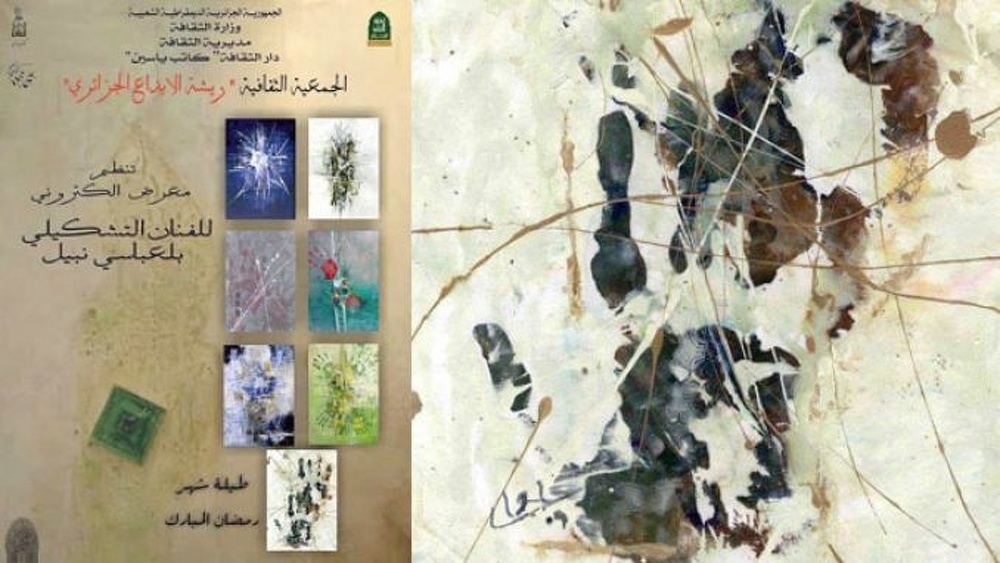
Algeria, May 4 / ONA / In spite of the home isolation that casts shadows on individuals and families in Algeria, the plastic artist Nabil Belabassi did not give in to these conditions, and he thought that a group of his works be shared with the public through a virtual exhibition whose activities will continue throughout the month of Ramadan. Belabassi used many techniques to express his ideas, and resorted to symbols with religious connotations, which show his influence on the literature of the abstract and semi-realistic styles.
Among the symbols that can be observed on some of the works, we find the hand, in which the artist sees great value, whether in the individual's daily life, or even in Islam, as the uses of the hand are evident in the Tashahhud (testimony of faith) during prayer, and in the performance of regular routine works. The artist also used the crescent symbol in some paintings, in reference to the holy month of Ramadan. The Islamic architecture is evident in the painting entitled “Prayer.” In other paintings, he celebrates a number of mosques in the city of Tlemcen, the birthplace of Belabassi.
Among the works on display are the “Hurufiyat” (Letters) painting in which the artist blended a variety of small squares scattered, and a mixture of colors ranging from yellow, blue, green, orange and red.
The landscapes were not absent from the interests of Belabassi, as he excelled in drawing paintings that he dreamed of from nature. The painter expressed his love for nature and his attachment to it, so he embodied it with the diversity of its manifestations and expressions, which ranged from the appearances of joy and sorrow; sometimes the turmoil as we find in the painting “The Raging Sea”.
In his works, Belabassi balances colours, shapes, and lines as basic elements in the construction of the plastic painting, and in the expression of his personal experience, which stems from the depths of the dictates of the self committed to the elements of performing an original artwork, which combines all of these elements, but very nicely, the painting gives its meaning and sobriety.
It is noteworthy that Nabil Belabassi, born in 1978, obtained a certificate of general art studies in 2007, and in 2009 he received a certificate of fine arts from the School of Fine Arts in Azazga in the Tizi Ouzou province. He participated in group exhibitions, organized individual exhibitions, and recorded his artistic presence through dozens of paintings that demonstrated high technical capabilities and inherent talent.
/ ONA / 178
Car cinema opens in Tehran ... Cultural Bulletin ...
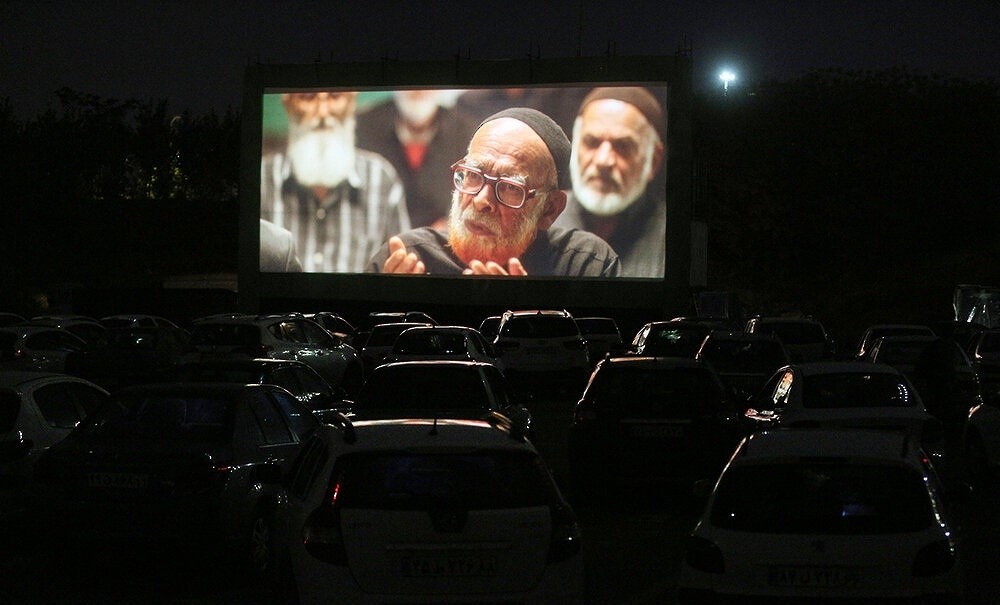
Tehran, May 4 / ONA / Car Cinema opens in Tehran after closing most of the cinemas in Iran due to the outbreak of Corona virus. This cinema is characterized by the ability of viewers to enter their cars to watch movies without having to leave their seats. The cinema witnessed the screening of the film "Exit" by Iranian director Ebrahim Hatamikia, for the first time, on a big screen in the Milad Tower in Tehran. The viewers watched the events of the film from inside their cars. The film will run for seven days, considering the declared health measures by the National Committee to Combat Corona.
/ ONA / 175
Belgian Olivia Hensken issues the “Dead King” ... Cultural Bulletin ...
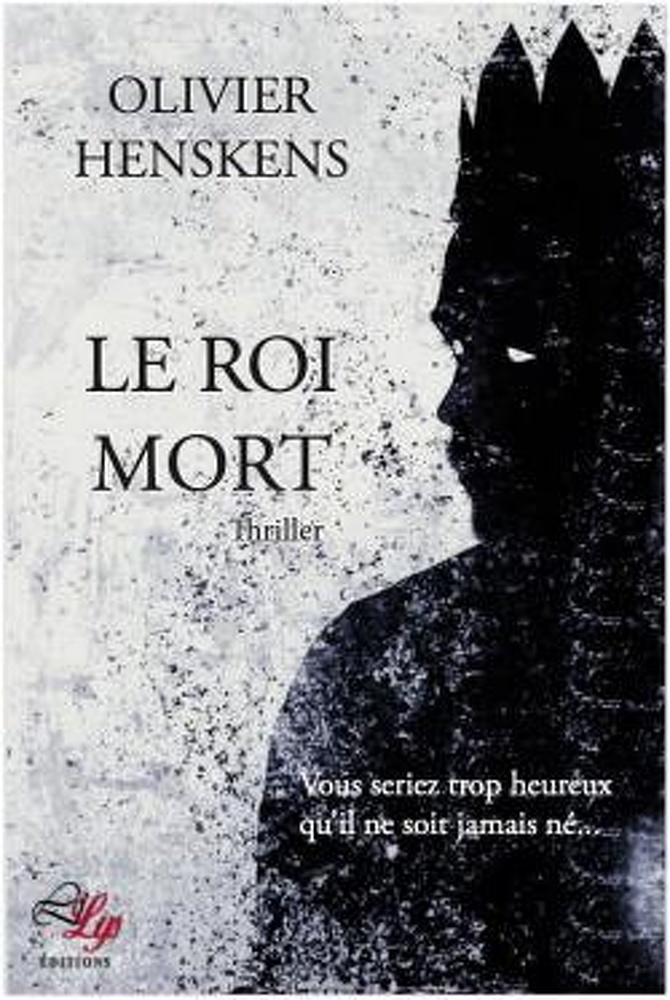
BRUSSELS, May 4 (ONA) - The novel “Dead King” by the Belgian writer Olivia Hensken deals with one’s life in the event that he or she does not get love from his or her family and those around him or her.
The novel, which was recently published in the French language, takes place in the author’s town of “Namur”, after he continued his studies at its university, although he descended from the Belgian center region. The story finds its roots in Greek tragedy as it addresses the life of an unpopular child. He grew up in a house where he never appeared to belong to a well-to-do family, some of whom does not care about (the mother), and others who practice violence against him (the father).
As the child was entrusted from his birth to nannies who did not make any effort in his education, then a feeling of non-recognition grew, and he was lost. His massive structure and twisted muscles were the only reliable ally with disappointing hopes and devastating encounters.
However, the boy is distinguished by having the choice and influencing the course of his life, as he has the opportunity many times to change everything and behave in another way that is not the path of shadow, and he discovers his true authority by facing the only certain thing in life, which is death. He becomes a special killer.
ONA / 179