
Source: Bloomberg
The Sultanate of Oman Plans to Increase Oil Storage Capacity as Gulf States Seek to Bypass the Strait of Hormuz
OQ is considering purchasing two very large crude carriers, each with a capacity of two million barrels, for floating storage at Duqm.
The Sultanate of Oman aims to increase onshore storage capacity at Duqm to around 40 million barrels over the long term.
The Sultanate of Oman plans to more than double its oil storage capacity at a port located outside the Strait of Hormuz, seeking to capitalize on its strategic location at a time when energy producers in the region are looking for alternatives to bypass the waterway, which is experiencing heightened tensions.
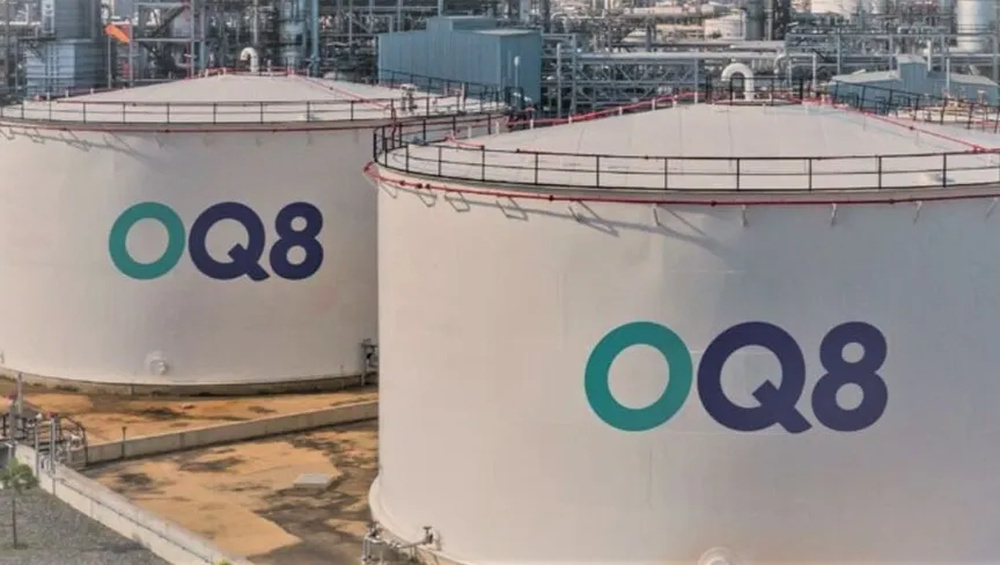
OQ Chief Executive Officer Ashraf Al Mamari said in an interview that the state-owned energy company OQ SAOC is considering purchasing two very large crude carriers and chartering them for use as floating storage at the Port of Duqm. The company also plans to increase its onshore crude oil storage tank capacity to 10 million barrels within three years, from around 5 million barrels currently.
Oil storage facilities outside the Strait of Hormuz have become increasingly important as the vital energy corridor has been disrupted by the conflict in the Middle East. Producers such as the United Arab Emirates and Saudi Arabia are sending tankers through the strait with their transponders switched off, while also exploring alternative pipeline routes.
Duqm as a Pipeline Destination
Storage at Duqm, overlooking the Arabian Sea, provides customers with easier access to their crude oil rather than relying on the riskier passage of vessels through the Strait of Hormuz. Al Mamari said it would take around six months to prepare the two very large crude carriers for use as storage after they are purchased.
Duqm has long been considered a potential endpoint for a pipeline crossing the Arabian Peninsula to export crude oil from fields in countries such as Saudi Arabia or Kuwait, but no such project has moved forward. The area also hosts a refinery developed as part of a joint venture with Kuwait's state-owned oil company.
Following the closure of the Strait of Hormuz, both Saudi Arabia and Kuwait said they were considering pipeline alternatives, without providing specific plans. Amin Nasser, Chief Executive Officer of Saudi Aramco, said the company was exploring alternatives to traditional export routes through the Red Sea and the Arabian Gulf. The United Arab Emirates is also planning to establish additional pipelines to its oil hub in Fujairah, outside the Strait of Hormuz.
The Sultanate of Oman Open to Gulf Pipeline Plans
Al Mamari said: “With regard to pipelines, the message from the Sultanate of Oman is that we are, of course, open to them, but the discussions are still at a very early stage.” He added that the talks are taking place at the government level and that he does not have details about them.
Al Mamari indicated that a decision on adding two very large crude carriers for floating storage at Duqm, with a capacity of two million barrels each, is expected to be made later this year, after OQ evaluates the high cost of the two vessels and the potential benefits of storing crude oil.
Freight rates have surged as the war in the Middle East has increased risks and forced vessels to alter their routes to avoid areas of tension. The cost of chartering the largest oil tankers, known as very large crude carriers, on the main route from the Arabian Gulf to China has risen to more than $1 million per day.
Targeted Onshore Capacity of 40 Million Barrels at Duqm
Over the longer term, the Sultanate of Oman aims to expand the onshore storage tank facility at Duqm, ultimately bringing its capacity to around 40 million barrels of crude oil.
Separately, Al Mamari also said that OQ is seeking to acquire rights for oil and gas exploration and potential production in African countries such as Angola, Algeria, and Libya. In Angola, the company is negotiating an agreement to explore for gas in Offshore Block 24 and hopes to complete it next year, after which it will consider other areas.
He added that OQ is participating in bidding rounds to obtain exploration rights in Algeria and is holding talks on similar projects in Libya, as it seeks to expand its presence in Africa across exploration and production, refining and petrochemicals, trading, and renewable energy.
He noted that the company is considering plans to sell shares in its refining and petrochemicals businesses, which could be offered on the market in 2027. The company does not plan any initial public offerings next year.