
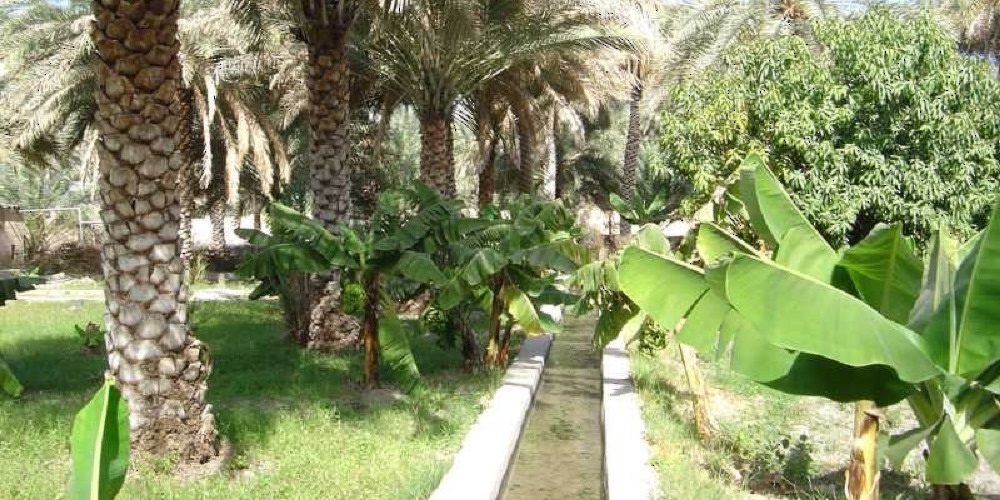
Al- Omania/ On the occasion of the World Water Day, 22nd of March, which is entitled this year as “Groundwater - making the invisible visible”, The Office of the Food and Agriculture Organization of the United Nations / FAO / in the Sultanate of Oman praised the vital role of the Sultanate of Oman in this field. The efforts of the Sultanate of Oman are clearly represented in the Ministry of Agricultural Wealth, Fisheries and Water Resources in taking effective measures towards groundwater. Those measures reflect the importance of groundwater in making sustainable development policies through various projects in the fields of agriculture, industry, ecosystems and climate change adaptation across the Sultanate of Oman.
FAO office in the Sultanate of Oman indicated that the project of “Building a Resilient Environment and Sustainable Agricultural and Water Resources in the Sultanate of Oman” is the first of its kind in the Sultanate 0f Oman. That project is implemented by the Ministry of Agricultural Wealth, Fisheries and Water Resources in coordination with the Food and Agriculture Organization of the United Nations, the Civil Aviation Authority and Sultan Qaboos University and with funding from The green climate Fund.
FAO office pointed out that the project deals with one of the activities of the main traditional water sources, which is groundwater, including traditional aflaj systems. It also provides analysis of the effects of seawater intrusion on the quality and availability of groundwater, stressing that this activity will contribute to identifying appropriate integrated solutions for water management. Thus, this would help to take sound decisions in the future to manage the resource sustainably.
Additionally, it stated that population growth; rapid urbanization and economic development are among the factors that cause an increase in the demand for water, energy and food. It also indicated that agriculture is the largest consumer of fresh water resources in the world, as more than a quarter of the energy used globally is consumed on food production and supplies.
FAO office stated that providing food to the world population who is expected to reach 9 billion people by 2050 would require an increase in food production by 60%. It stressed that the exploration, protection and sustainable use of water would be critical for survival, adapting to climate change and meeting the needs of the growing population.
FAO office explained that in 1993, the United Nations assinged 22nd of March as the World Water Day with the aim of celebrating water and raising awareness of the need to confront the challenges faced by the 2 billion people who live without access to potable water. Additionally, it is of high significance to take measures to address the global water crisis. UN explained that the focus of the Global Water Day is to support the achievement of the sixth sustainable development goal, which is ensuring access to water and sanitation services for all people by the year 2030.
He added that the FAO participated in the Sustainable Development Goals (SDGs) by discussing land and water resources management. It indicated that the sustainable development goals on increasing food production come by using less water. FAO focuses also on the drivers of improving resource management, including small farmers, rural women and rural investment, in addition to improving technical information for policymaking.
The Office of the Food and Agriculture Organization of the United Nations/FAO/ in the Sultanate of Oman indicated that groundwater constitutes an essential element of ensuring a proper functioning of ecosystems such as: wetlands and aflaj, which are among the traditional irrigation systems in the Sultanate of Oman. They consist of a channel dug into the ground through which water flows. FAO indicated that the overexploitation of groundwater might lead to many challenges such as instability and subsidence of land and seawater intrusion underground. Therefore, it calls on everyone to protect groundwater from pollution, use it sustainably and achieve a balance between the needs of people and the planet.