
The concept of social welfare in the Sultanate of Oman goes beyond the meaning of a service-based care approach to include the principles of equity, social inclusion, community participation, and cognitive and economic empowerment. This stems from the belief that social investment directed toward developing human capital and enhancing its abilities, latent energies, and potential must contribute to achieving the principle of independent living, which can pave the way for a shift from dependency and isolation to participation and effective contribution to the path of comprehensive community development. To this end, the Ministry of Social Development seeks to develop its programmes, activities, and services directed at various segments of society, so that every individual is able to harness their full potential to achieve an appropriate standard of living within a cohesive family and a prosperous society.
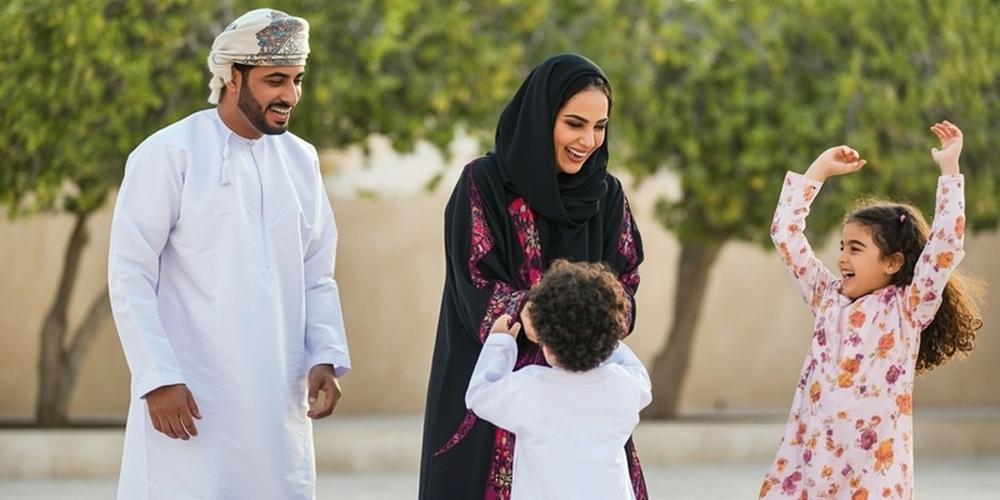 The social welfare sector includes a range of different programmes and services provided to groups and cases in need of care and assistance, with the aim of ensuring decent living for citizens. The “Tamasuk” programme seeks to deliver the best distinctive programmes and services for the family, protect it, develop its capacities, and empower it to become a productive family that contributes to and participates in the process of comprehensive and sustainable development. The programme covers a number of activities, such as marital counselling, family cohesion, family protection, and women’s affairs programmes.
The “Taqdeer” programme aims to provide social, health, and psychological care to senior citizens and persons with disabilities in their homes and within their family and social environment, with the goal of raising the standard of care, providing the necessary services and assistance, ensuring an appropriate environment, and delivering rehabilitation and training for persons with disabilities, as well as achieving social inclusion.
Through the “Tawasul” programme, the Ministry of Social Development seeks to spread social and developmental awareness among various segments and groups of society, with the aim of cooperation and communication among government institutions, the private sector, and civil society to participate in and contribute to raising community awareness in support of comprehensive development. This is achieved through forums, lectures, seminars, meetings, studies, projects, and media programmes designed to raise public awareness of various social issues.
 The “Takammul” programme regulates the relationship between the Ministry and civil society institutions and the private sector, in order to realise the principle of community partnership and the integration of roles among relevant sectors, with the aim of developing society and building an effective partnership. The programme covers a number of activities, including promoting the importance of volunteer work, legal awareness for women, and encouraging community initiatives.
Through the “Takayyuf” programme, care and rehabilitation are provided for cases released from prison and those recovering from drug use, through developmental programmes aimed at reintegrating these cases and restoring them to their normal circumstances, enabling them to participate and adapt within their social and family environment.
The “Tamkeen” programme targets beneficiaries of the social security allowance and low-income groups, with the aim of transforming them into self-reliant cases, investing in their capacities, promoting the concept of self-employment, and reducing social security expenditure. Meanwhile, the Vocational Assessment and Rehabilitation Centre aims to provide care for persons with intellectual disabilities whose condition is suitable for vocational rehabilitation.
The Ministry of Social Development works to provide various social programmes, such as family guidance and counselling services for cases experiencing certain social, economic, and psychological problems, with the aim of reducing or limiting these problems and identifying appropriate solutions, leading to greater stability in family life, preserving the family entity and cohesion, and improving the social and economic efficiency of its members in light of rapid life changes and influences.
 The Child Welfare Centre cares for children who have been deprived of natural family care due to specific social circumstances. It provides them with comprehensive residential and living care, in addition to educational, social, cultural, and recreational programmes and other childhood-related activities. “Youth Integration Homes” were also established for those deprived of natural family care who are male and over the age of 14, in the age group (14-20) years. “Nurseries” also provide social, educational, and cultural services for children from the age of six months to three and a half years.
The Ministry of Social Development supervises civil and professional associations, Omani Women’s Associations, and social clubs for foreign communities. It follows up on the work of these associations to ensure their compliance with the provisions of the Civil Associations Law and the decisions and regulations governing their activities. The number of Omani Women’s Associations and their branches reached (64) associations and branches, while the number of charitable associations and institutions reached (42) associations, and the number of professional associations reached (39) associations, in addition to (20) social clubs for foreign communities.