
Within the framework of the supreme interest of His Majesty Sultan Haitham bin Tarik – may Allah protect him – in improving environmental performance and reducing the effects of climate change, the year 2050 was approved as the target date for achieving carbon neutrality. To meet this goal, a national plan was prepared and the Oman Sustainability Centre was established to take responsibility for supervising and following up the plans and programmes for carbon neutrality. His Majesty the Sultan has directed all administrative apparatus units and the concerned authorities to enhance their efforts to implement the national plan and achieve the targeted objectives.
The Sultanate of Oman has taken significant steps to accelerate procedures for organising the hydrogen sector, setting the legal regulations and the required policies, and selecting the best sites for hydrogen production.
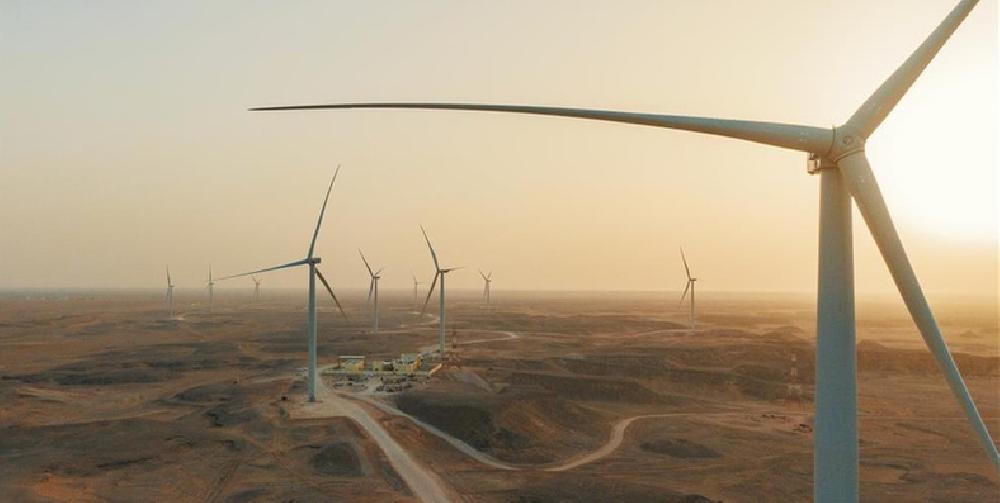
The Sultanate of Oman is endeavouring to be among the top-ranked countries in the world producing green hydrogen by providing the main pillars of production, including solar energy, wind energy and vast lands. Moreover, Oman has wide experience in producing and exporting energy, in addition to its relations around the world. Therefore, it is at the centre of global markets and trade, which makes Oman a significant hub for producing and exporting green hydrogen.
The Ministry of Energy and Minerals is working to develop a strong, clean and green hydrogen economy by uniting efforts with related parties such as government units and specialised companies.
The Ministry of Energy and Minerals is taking many steps in this regard, most importantly: forming a ministerial committee and technical teams specialising in uniting efforts to develop the renewable energy and hydrogen sector. It launched a programme whose specialised courses are compatible with the governance system to ensure proper planning and effective, consistent implementation of the Royal directives.
The Ministry of Energy and Minerals affirms that it collaborates with the concerned government parties such as the Ministry of Housing and Urban Planning, the Ministry of Defence and the Environment Authority to determine appropriate sites for renewable energy production through solar and wind energy, and then direct it to produce green hydrogen. It aims to enhance investment locally and abroad and localise this technology in the Sultanate of Oman.
After identifying sites and dividing them into small marketable areas, they are offered to investors for bidding and comparison between offers, similar to the mechanism used when offering concession areas for oil and gas.
The Sustainable Energy Research Centre at Sultan Qaboos University opened the Sultanate's first hybrid station for electric power production experiments, on the sidelines of the Green Hydrogen Horizons Forum.
As a result of the efforts made in this sector, the Public Authority for Special Economic Zones and Free Zones congratulated ACME Company – a leader in the renewable energy sector – on its announcement that it had received the world’s first accredited international certificate to produce green hydrogen and ammonia commercially, through its project in the Special Economic Zone at Duqm.
In addition, OQ Group signed a memorandum of understanding with Korea Gas Technology Corporation with the aim of exploring more opportunities in producing green hydrogen.
The Public Authority for Special Economic Zones and Free Zones also signed a land reservation agreement with Highport Duqm for the lower part of the Green Hydrogen and Ammonia Production Facility Project. It is a joint project in the alternative energy sector between OQ Group and the Belgian DEME Group.
Based on the land reservation agreement, Highport Duqm will develop a green hydrogen production facility on an area of 793,000 square metres with a capacity of 500 megawatts, near the port of Duqm. It is to produce alternative energy through wind turbines and solar panels that will be installed in the area allocated for alternative energy in the Special Economic Zone at Duqm, which had previously signed an agreement for an area of about 200 square kilometres.
The Highport Duqm green hydrogen production project consists of three phases. The first phase is the installation and commissioning of a solar and wind energy field. The second phase is the establishment of a green hydrogen production station consisting of an electrolysis plant, an ammonia synthesis plant, and storage facilities. The third phase is the construction of a high-voltage transmission line between the field and the plant.
Earlier, Highport Duqm installed and operated four wind-speed poles and two solar meteorological stations on site to ensure that the company collected the data needed to complete the detailed feasibility study for the project.
Additionally, ASYAD Group signed a memorandum of understanding with the Oman Hydrogen Centre at the German University of Technology in Oman to study the role of Omani ports and logistics services in building a green hydrogen economy in the Sultanate of Oman.
The terms of the memorandum include conducting integrated research and studies, investigating global best practices to raise the efficiency of logistical operations in the port sector and the maritime transport fleet, and strengthening ASYAD’s human capital capabilities. This would enhance opportunities for business exploration and initiatives in the green hydrogen and clean energy sector.