
The Omani economy achieved high levels of growth in 2022, with excellent public finance management, an improvement in the country’s credit rating, and increases in GDP and in oil and non-oil revenues. Foreign trade was robust, indicators were broadly positive across the labour market, and inflation was under control at the safe and acceptable level of 2.8% at the end of November 2022.

This satisfactory outcome was driven by the Sultanate’s adoption of fiscal and economic policies that strengthened performance in key areas at a time when the government was focused on the recovery from the Covid-19 pandemic. The latter had had a major impact on employment and on retail and other economic activity, and the policies leading the recovery targeted oil and gas revenues for optimal exploitation. Also in their sights was the growth potential of an expanded private sector, and of broader investment goals. Several major development projects were singled out for accelerated completion. And in the crucial matter of public spending and public debt levels, the constant drive for further efficiencies was seen as a priority.
(OMR million)
|
Item |
Jan-Sept 2022 |
Jan-Sept 2021 |
% Change |
|
Oil activity |
12,487.4 |
7,239.6 |
72.5 |
|
Non-oil activity |
20,765.9 |
18,115.0 |
14.9 |
|
GDP at producer price |
32,589.1 |
24,737.1 |
31.9 |
|
Total output at market price |
32,045.6 |
24,618.1 |
30.4 |
Source: Monthly Statistical Bulletin - December 2022 - National Centre for Statistics and Information
|
Description |
Value (OMR million) |
|
Crude oil |
10,949.0 |
|
Natural gas |
1,538.4 |
|
Agriculture, forestry and fishing |
619.0 |
|
Industrial activities |
6,274.3 |
|
Service activities |
13,872.6 |
Source: Monthly Statistical Bulletin - December 2022 - National Centre for Statistics and Information
Government revenue for the first ten months of 2022 was steady and rising, reaching a total of OMR11.8 billion as compared with OMR8.3 billion for the same period of 2021, and exceeding the budgeted target of OMR10.6 billion.
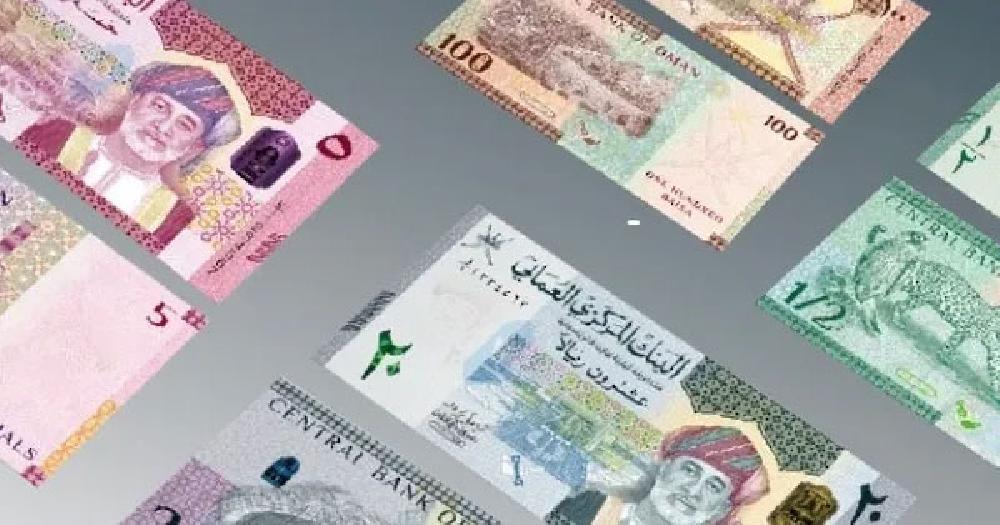
Spending was also up in 2022, with the OMR10.6 billion figure by October representing a 14% increase over that of OMR9.3 billion for the same period in 2021. A budget surplus of OMR1.208 billion was recorded at the end of October 2022, marking a positive advance on the OMR1 billion deficit of the same date in 2021.
(OMR million)
|
Description |
Jan-Oct 2022 |
Jan-Oct 2021 |
% Change |
|
Net oil revenue |
6,193 |
4,443 |
39.4 |
|
Gas revenue |
3,051 |
1,698 |
79.7 |
|
Current revenue |
2,594 |
2,129 |
21.8 |
|
Capital revenue and recoveries |
24 |
63 |
-61.9 |
|
Total revenue |
11,862 |
8,333 |
42.3 |
Source: Financial Performance Bulletin - November 2022 - Ministry of Finance
|
|
Jan-Oct 2022 |
Jan-Oct 2022 |
|
Current expenses |
7,879 |
7,195 |
|
Development expenditure |
765 |
694 |
|
Oil and gas sector expenditure |
0 |
783 |
|
Contributions and other expenses |
1,527 |
668 |
|
Expenditure pending settlement |
483 |
0 |
|
Total expenditure |
10,654 |
9,340 |
Source: Monthly Statistical Bulletin - December 2022 - National Centre for Statistics and Information
In 2022, the Sultanate concentrated on repaying high-cost loans with a focused view on achieving an early reduction in public debt. This strategy resulted in a decline of debt to OMR18.4 by the end of August 2022, a drop of OMR2.4 billion in eight months.
The same year saw a repurchase of some sovereign bonds at below their issuance value, and the issuance of local instruments for trade on the Muscat Stock Exchange at a relatively low cost. These efforts have combined to reduce public debt, as well as to release repayable interest amounting to OMR127 million from future debt service. Among the significant results of this fiscal rectitude have been enhanced investor confidence in the Omani economy, an upwardly revised credit rating, and an improved overall outlook for the Sultanate.
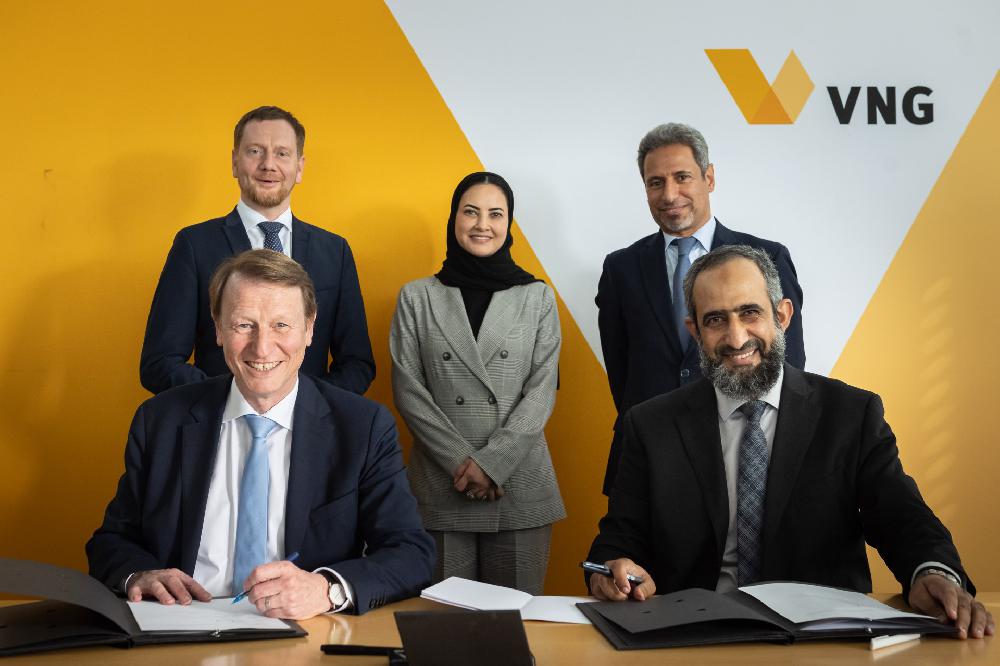
The major credit rating agencies raised the Sultanate’s rating as its debt-reducing initiatives took hold. Accompanying the cost-saving measures designed to control financial performance was a rise in the oil price which, with other efficiencies, led to an overall improvement in financial indicators.
|
Source |
Rating |
Rating date |
|
Fitch |
BB Outlook Stable |
August 2022 |
|
Moody’s |
Ba3 Outlook Positive |
October 2022 |
|
Standard and Poor Global |
BB Outlook Stable |
November 2022 |
The volume of foreign direct investment in the Sultanate had increased by the end of the third quarter of 2022 by 10.4% to OMR18.14 billion. Meanwhile, the Sultanate’s global trade exchange was valued at OMR30.4 billion for the year to September 2022, an impressive increase of 46.1% compared with the corresponding date in 2021.
Foreign direct investment in the manufacturing sector stood at OMR1.7 billion, as compared with OMR1.5 billion for the same period in 2021.
Oman Vision 2040 constitutes the national economic and social planning blueprint for the coming decades, describing the strategic outlines of the period from 2021 to 2040. From this vision emerge all of the sectoral policies and five-year development plans. The Vision was prepared with extensive community input and aims to refine both social welfare and broader economic benefits, while transitioning the economy from dependence on oil to one that is more diversified and knowledge-based.
|
Indicator |
Baseline 2018 |
Status in 2021 |
Target 2030 |
Target 2040 |
|
Global Innovation Index |
69 out of 127 countries |
76 out of 132 countries |
Among top 40 countries |
Among top 20 countries |
|
Global Competitiveness Index |
47 out of 140 countries |
Not assessed |
Among top 30 countries |
Among top 20 countries |
|
Global Competitiveness Index – Skills Pillar |
36 out of 140 countries |
Not assessed |
Among top 20 countries |
Among top 10 countries |
|
Global Governance Indicators – Government Efficiency |
81 out of 209 countries |
88 out of 214 countries |
Among top 30 countries |
Among top 10 countries |
|
Environmental Performance Index |
115 out of 127 countries |
110 out of 180 countries |
Among top 40 countries |
Among top 20 countries |
|
Indicator |
Baseline 2017 |
Status in 2021 |
Target 2030 |
Target 2040 |
|
Average per capita GDP |
OMR7617.8 |
OMR7657.1 |
40% increase 90% increase |
90% increase |
|
Indicator |
Baseline 2000-2017 |
Status in 2021 |
Target 2030 |
Target 2040 |
|
Mean real GDP growth rate |
3.6% |
2.95% |
5% increase |
5% increase |
|
Indicator |
Baseline 2017 |
Status in 2021 |
Target 2030 |
Target 2040 |
|
Contribution of non-oil sectors to GDP |
61% |
72.8% |
83% upwards |
90% upwards
|
|
Indicator |
Baseline 2017 |
Status in 2021 |
Target 2030 |
Target 2040 |
|
Foreign investment contribution to GDP |
4.12% |
4.5% |
7% upwards |
10% upwards |
|
Indicator |
Baseline 2016 |
Status in 2021 |
Target 2030 |
Target 2040 |
|
Omanisation rate - total private sector jobs created |
11.6% |
16.5% |
35% upwards
|
40% upwards
|
The Oman Investment Authority drafted a five-year work strategy in 2022 up to 2026. The plan revolves around stimulating performance in the Authority’s various subsidiaries, improving productivity, raising the investment level to one more capable of contributing to economic and social development, and increasing the contribution to GDP and to the state’s general budget. Since its inception, the Authority’s annual return has averaged 10.3%.
The Authority invests in more than 40 countries around the world, acting under the umbrella of two broad strategies. Its public market investment arm seeks out opportunities in global stocks, fixed-income bonds and short-term assets, while its private market arm invests in real estate projects, logistics services, the service sector, mining and industrial projects, technology, infrastructure, food and healthcare.
- Achieving financial sustainability, enhancing profitability, and raising the contributions of the tourism, agriculture, fisheries and technology sectors.
- Stimulating growth in selected investment sectors.
- Increasing its contribution to GDP.
- Attracting private sector investors through new, productive departures; exiting certain existing investments; and further privatisation.
- Identifying upwards of 20 assets with a view to achieving returns of some OMR2.6 billion.
- Contributing more to local added value.
- Encouraging synergy and integration between companies in more than 100 areas with a positive impact on supply chains, digitalisation, human resources and profit.
- Enhancing efficient governance and transparency by issuing a corporate governance charter for companies associated with the Oman Investment Authority.
First: The National Development Portfolio
Specialises in managing all assets and all domestic corporations (a total of 160 companies).
Its objectives:
To contribute to the growth and development of the Omani economy.
To underpin the state's general budget through dividend distributions, the proceeds of privatisation, and treasury management.
Second: The Generational Portfolio
Consists of foreign assets and some domestic assets, incorporating public and private investments and real estate.
Its objectives:
To maximise returns for the benefit of future generations.
During 2022, the Omani banking sector logged growth in several areas. At the end of October, deposits were up to OMR25.6 billion, an increase of more than OMR400 million from end-October 2021. Meanwhile, credit allocated rose from OMR27.8 billion to OMR28.9 billion, and several other indicators flagged a positive overall picture for the banking sector.
• OMR1 billion: capitalisation of Central Bank of Oman
• OMR28.9 billion: total credit disbursed by banking sector
• OMR24.1 billion: credit disbursed to private sector
• OMR5.3 billion: financing disbursed by Islamic banks and windows
• OMR25.6 billion: total bank sector deposits
• OMR38.5 billion: total assets of conventional commercial banks
• OMR6.4 billion: total assets of Islamic banks and windows
• OMR1.6 billion: cash in circulation
• OMR20 billion: broad money supply (M2)
Tender Board
In 2022, the Tender Board awarded projects valued at OMR505.3 million, double the 2021 value of OMR252.5 million and substantially above the OMR392.2 million awarded in 2020.
|
Serial |
Tender |
Value (OMR) |
|
1 |
Provision of catering, nutrition, hygiene, laundry and pest control services for hospitals, complexes and medical centres affiliated to the Ministry of Health |
59,980,184 |
|
2 |
Supply of medicines, vaccines and serums to the Ministry of Health |
52,106,855 |
|
3 |
Construction of a dam to protect against flood risks in the Wadi Uday mountain gorge in Wilayat al Amerat, Muscat |
38,660,023 |
|
4 |
Design and construction of 13 schools in various governorates of the Sultanate |
26,780,000 |
|
5 |
Supply, design and installation of the government financial system for a period of (5 years) on behalf of the Ministry of Finance |
21,345,353
|
|
6 |
Establishment of the Central Public Health Laboratory |
18,214,697 |
|
7 |
Project to pave the Harweb-Mateen Road in Dhofar Governorate |
17,398,334 |
|
8 |
Renewal of the Microsoft agreement for government organisations for a period of 3 years (2021-2024) |
16,546,415 |
|
9 |
Establishment of Mahout Hospital in Al Wusta Governorate |
13,920,686 |
|
10 |
Maintenance of asphalt roads in Al Dakhiliyah Governorate over a 5-year period |
13,721,199 |
The oil and gas sector is a major supporter of economic and social development in the Sultanate of Oman. The Sultanate has total oil reserves of 4.8 billion barrels and natural gas reserves of 23 trillion cubic feet.
New exploratory surveys were conducted in 2022 with a view to developing the sector by increasing the number of producing wells. Moreover, additional investment was focused on expanding the potential of value added projects.
|
Item |
Jan-Nov 2022 |
Jan-Aug 2021 |
% Change |
|
Total oil production |
355.4 million barrels |
323.1 million barrels |
10% |
|
Average daily production |
1.064 million barrels |
967,600,000 barrels |
10% |
|
Average price of Omani crude oil |
US$95.8 per |
US$62.7 per barrel |
52.7% |
|
Total oil exports |
293.9 million barrels |
260.8 million barrels |
12.7% |
In 2022, the Muscat Stock Exchange logged its best annual performance in 5 years, bringing the trading value to about OMR940.3 million, as compared with OMR818.2 million in 2021, and OMR441 million in 2020.
The main stock index rose 17.6% to close at 4857 points, an uptick for the year of 727 points.
The main indicators of the Muscat Stock Exchange by the end of 2022
|
Item |
2022 |
2021 |
|
Close - main indicator (points) |
4857 |
4129
|
|
Total turnover (OMR million) |
940.3 |
818.2 |
|
Transactions executed (trades) 134,475 151,527
|
134,475
|
151,527
|
|
Value of bonds and instruments traded (OMR million)
|
57.5 |
172.9 |
|
Market value as at 31 December (OMR billion)
|
23.7 |
22.1 |
|
Item |
Jan-Sept 2022 (OMR million) |
|
Oil and gas exports |
12,502.6 |
|
Omani non-oil exports |
5,619.5 |
|
Re-exports |
972.6 |
|
Total merchandise exported |
19,094.7 |
|
Registered merchandise imports |
11,326.7 |
|
GDP at current prices – service activities |
13,872.7 |
|
Contribution of wholesale and retail trade to GDP |
2,630.8 |
First: Countries importing Omani oil
|
Country |
Volume (million barrels) |
|
China |
192.1 |
|
India |
29.8 |
|
South Korea |
9.3 |
|
Japan |
9.2 |
|
Other countries |
2.2 |
Second: Omani non-oil exports
|
Country |
Value (OMR million) |
|
United States |
689.2 |
|
Kingdom of Saudi Arabia |
616.8 |
|
United Arab Emirates |
582.8 |
|
India |
576.6 |
|
Qatar |
274.0 |
|
Other countries |
2,880.1 |
Third: Re-export
|
Country |
Value (OMR million) |
|
United Arab Emirates |
334.8 |
|
Iran |
150.0 |
|
United Kingdom |
46.1 |
|
Kingdom of Saudi Arabia |
42.0 |
|
Yemen |
38.2 |
|
Other countries |
361.5 |
Fourth: Imports
|
Country |
Value (OMR million) |
|
United Arab Emirates |
3,272.7 |
|
Kingdom of Saudi Arabia |
1,270.4 |
|
India |
1,043.5 |
|
China |
813.1 |
|
Qatar |
679.8 |
|
Other countries |
4,247.2 |
The Sultanate’s overriding economic strategy for the coming decades is to increase the contribution of the industrial sector to GDP and to create job opportunities for citizens. In 2021 and 2022, a number of initiatives were launched to this end.
One such initiative is the national promotional campaign ‘Made in the Sultanate of Oman,’ organised on a yearly basis as an incentive to the manufacturing sector and local producers. The state sponsors a number of overseas fairs annually with a view to opening new markets for Omani goods, and encouraging more competitive instincts among producers.
• OMR6.2 billion: value of industrial activities to GDP
• 65.6%: record growth rate logged by manufacturing industry
• OMR193.9 million: mining sector contribution, up from OMR167.9 million in previous year
• OMR3.5 billion: value of manufacturing industries’ contribution to GDP
• OMR1.8 billion: value of construction sector contribution to GDP