
Falajs and Ains
Despite Oman’s vast terrain and diverse geography, the ingenious falaj irrigation systems have, since ancient times, provided an integrated network of water distribution. These channels carry water from mountaintops and deep wadis across long distances, allowing Omanis to use it for irrigation and domestic purposes. Falajs have existed in the Sultanate of Oman since before the advent of Islam, representing a remarkable feat of traditional engineering passed down through generations. Some falajs in Manah and Samail date back more than 1,500 years, while others in the governorates of North and South Al Sharqiyah were built at the beginning of the twentieth century.
The skill of the Omani people is evident in their methods of digging and constructing falajs, which reach depths of several tens of metres to access groundwater through canals. This was considered an engineering marvel at a time when mechanical equipment did not exist.
The term “falaj” derives from the Arabic verb falaja, meaning “to split” or “to divide.” In essence, a falaj is a water channel that originates from an opening in a high rock layer and extends for many kilometres until it reaches arable land. Where the channel runs along the surface, it is built as an open canal, and where it encounters high ground, it is extended by excavation — demonstrating advanced engineering skill. When the falaj must pass through lower terrain, a bridge is constructed to carry the water across. There are more than 4,000 falajs across the Sultanate of Oman, distributed among its various wilayats. The Wilayat of Sohar alone contains 70 falajs. These systems are categorised into three main types:
This type consists of a long underground canal that may extend for several kilometres and reach depths of many metres. Water flows continuously throughout the year. Da’woodi falajs account for about 45% of all falajs in Oman.
The water source for this type of falaj is a natural spring, such as the Hammam Falaj in Bousher in Muscat Governorate. The number of Ayni falajs is limited.
This type draws its water from surface and near-surface flow at depths not exceeding 3–4 metres. The water level rises immediately after rainfall but may dry out for extended periods. Gayli falajs constitute around 55% of Oman’s total falaj systems. Once the water reaches a settlement, it is distributed for domestic and agricultural use through a precise time-based system managed by an elected official known as the (Ameen al-Falaj). A portion of agricultural produce may be allocated to maintain the canals and public facilities, in accordance with community agreements supervised by the Ameen.
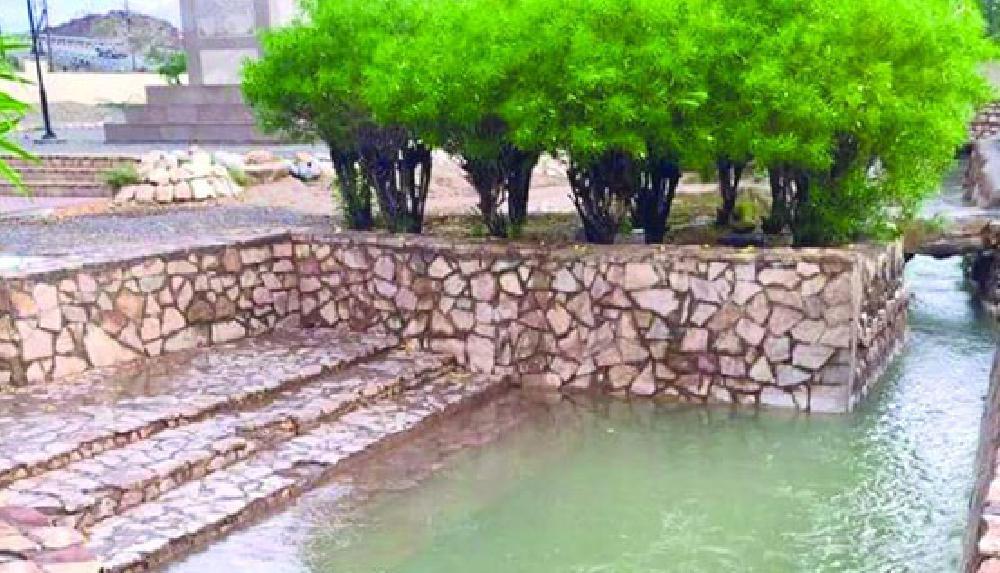
Falajs and natural springs remain vital water resources for most Omani towns and villages, yet they are vulnerable to fluctuations in rainfall and declining groundwater levels. The Sultanate of Oman continues to exert major efforts to improve the condition of its falajs and rehabilitate those affected by environmental or structural challenges. Comprehensive plans have been developed for their maintenance, implemented according to annual schedules.
With Oman’s rapid modern development, scientific and technical methods are now being applied to preserve and sustain the falaj system. These include the introduction of modern materials for maintenance, the enactment of relevant legislation, and the establishment of buffer zones for construction projects. The government has also implemented technical measures to protect falaj water sources from pollution and depletion, while safeguarding the channels from collapse.
Springs represent another primary water source in Oman, and their importance varies according to water quality, which—like other sources—is influenced by rainfall. Springs range from hot to cold, and from fresh to brackish or alkaline. Many contain varying mineral compositions, making them suitable for therapeutic and medical use. The significance of Omani springs lies in their substantial daily output: hot springs collectively discharge around 8 million gallons per day, while cold springs produce about 15 million gallons per day. Most springs originate in mountainous areas and differ in abundance, temperature, and mineral content.

Located in the village of Ghala in the Wilayat of Bousher, Muscat Governorate, approximately 10 kilometres from Sultan Qaboos Street. Renowned for its natural springs, Ain Ghala attracts both local and international visitors for hiking and bathing.
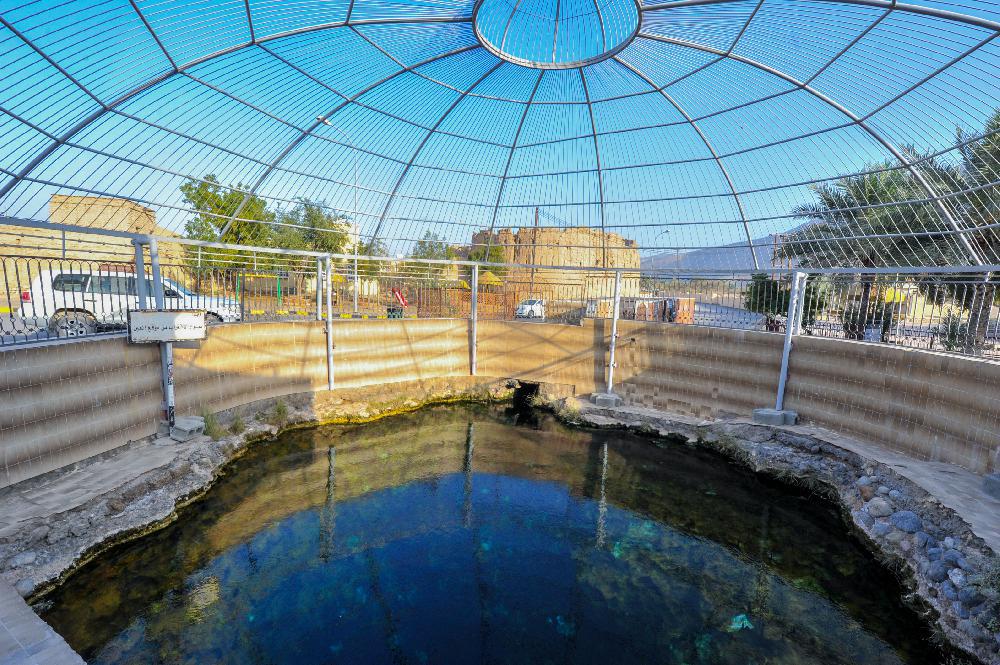
Located in the Wilayat of Nakhal in South Al Batinah Governorate, this spring originates in Jabal Sald. Its hot, therapeutic waters flow for about 300 metres before splitting into two branches: one feeding the Kubba Falaj and the other Al Sarooj Falaj. The town of Nakhal relies on this spring and its channels to irrigate approximately 90% of its crops.
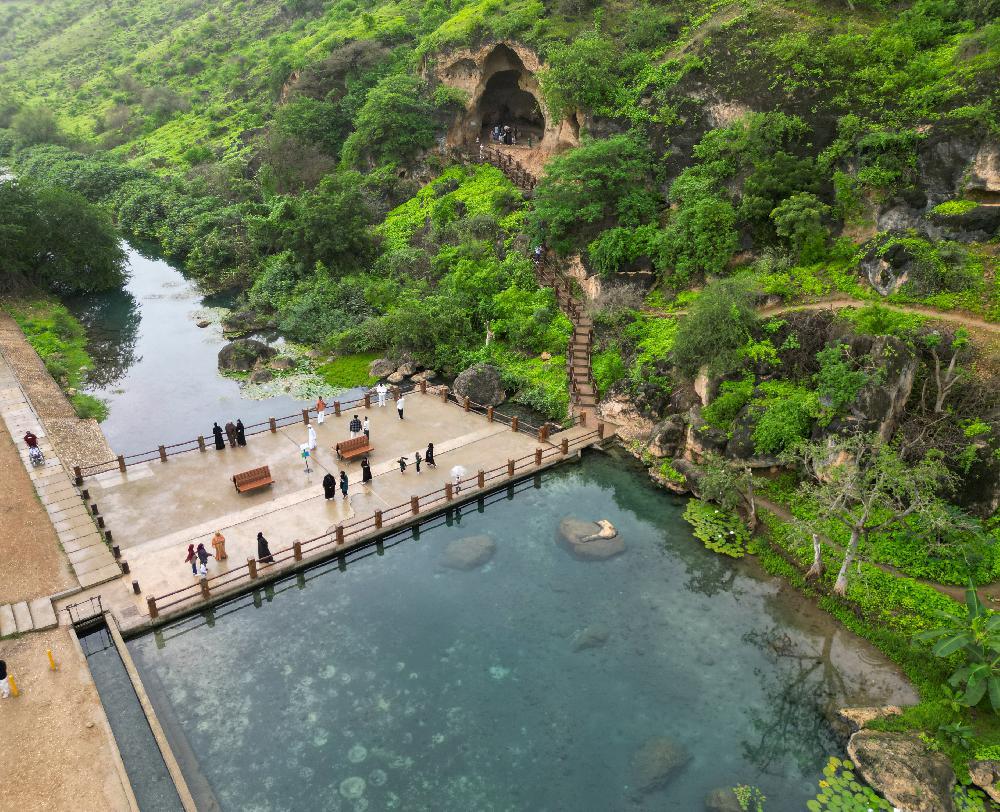
A popular year-round destination, particularly during the khareef season. Located about 7 kilometres from central Salalah, the spring lies in Jarzeez Valley, which is known for its natural landscapes and striking rock formations. The spring features a large pool resembling a natural swimming basin, surrounded by lush greenery and forested mountain peaks, easily accessible via a paved road.
One of the most abundant springs in Dhofar, Ain Arzat provides around 5.52 million cubic metres of water annually. Located 9 kilometres from Salalah, it features caves with easy access pathways and a family-friendly park. Its dense vegetation, varied tree species, and scenic mountain backdrop make it one of the most visited sites in the governorate.
Among Dhofar’s oldest and most significant springs, Ain Sahalnoot is located about 15 kilometres from Salalah. The area has been developed with pathways, pavements, and a bridge for visitors, especially popular during the khareef season. The spring’s canal extends for about 4 kilometres through a lively green setting.
Distinguished by its surrounding trees—including doum palms, fig, and coconut trees—Ain Hamran is a natural retreat located 14 kilometres east of Salalah. During the khareef season, the area becomes especially enchanting as clouds descend over the hills. Several springs erupt at the top of the valley after heavy rains, maintaining flow for weeks. A fenced main spring provides water year-round.
Located northeast of Taqah and about 42 kilometres from Salalah, Ain Darbat is one of Dhofar’s most prominent springs. Its waters feed the famous Darbat waterfalls, cascading down the mountainsides during the khareef season. Wadi Darbat, carpeted in greenery and lined with overhanging trees, offers a spectacular natural setting and various tourist amenities.
Situated 28 kilometres from Salalah, Ain Tobruk is a permanent spring enhanced with water channels leading to a small pond. Nestled among mountain peaks and dense trees near Khashim Valley, the site provides a picturesque retreat.
Located on a high valley, this seasonal spring becomes active during the khareef season as groundwater levels rise. Flow diminishes during the rest of the year.
One of the most beautiful springs in Dhofar, Ain Ishat lies 30 kilometres west of Salalah near Awqad. It is a favourite among photographers and birdwatchers, accessible by car, though four-wheel drive is recommended for deeper exploration. It can be reached via the Mughsail Beach road and is surrounded by dramatic valley scenery.
Located in Qairun Hayriti, around 30 kilometres from Salalah, Ain Khayut flows almost year-round, with its waterfalls most spectacular during autumn after heavy rainfall. Its combination of springs, valleys, and cascading falls attracts large numbers of visitors.
Situated in the mountains of Wilayat Mirbat, about 54 kilometres east of Salalah, Ain Hashir is known for its scenic beauty and for being home to rare giant baobab trees (Adansonia digitata), locally known as Al Kajji or Hyrum Atomic. Fewer than 30 of these trees remain, growing near the spring’s stream between Aqabat Hashir and Wadi Henna.
Located west of Salalah in the Raysut industrial area, about 20 kilometres from the city centre, Ain Kor is easily accessible and admired for its scenic surroundings. It has become a popular destination for both residents and tourists exploring Dhofar’s natural attractions.