
Provinz Buraimi
Das Gouvernement Al-Buraimi liegt im Nordwesten des Sultanats Oman und stellt eine wichtige Verbindung zu den Vereinigten Arabischen Emiraten dar. In Al-Buraimi befinden sich viele historische Forts und Burgen wie das Al-Khandak-Fort, Al-Hilla-Fort, Bayt-Al-Nad-Fort und das Al-Khabib-Fort. Weitere Sehenswürdigkeiten sind der Falaj Al-Sa’rnani, die Sanddünen der Al-Sininah-Wüste, die schwarzen Sandflächen von Kahl und die Dünen von Hamasa.
Das Gouvernement erlebt aktuell umfangreiche Entwicklungsprojekte, die das wirtschaftliche und touristische Potenzial der Region stärken sollen. Geplante Tourismusprojekte werden Al-Buraimi nicht nur auf regionaler Ebene, sondern auch im gesamten Sultanat als attraktives Reiseziel etablieren. Al Buraimi besteht aus drei Wilayats: Al Buraimi, Mahdha und Al-Sininah. Die Stadt Al-Buraimi ist das Verwaltungszentrum. Die Bevölkerung beträgt 135.861 Personen.
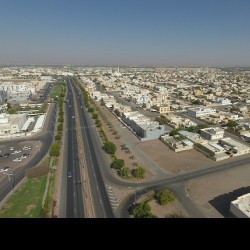
The Wilayat of Al Buraimi
It is one of the Wilayats of the Governorate of Al Buraimi. It is bordered by the Wilayats of Mahdah, Dhank and Suhar as well as the city of Al Ain of the United Arab Emirates. It is about 343 km away from Muscat, the capital. It takes the Khandaq castle as its symbol. It is the centre of Al Buraimi Governorate and one of its largest Wilayats in terms of population. It includes a number of important historical monuments represented in forts and archaeological houses, most notably Beit Bahr, Al Fayyad Fort, Hafit Fort, and Wadi Al Jizzi Fort. There are some villages in the Wilayat with about 49 falajs in addition to the extended sandy desert. The Wilayat of Al-Buraimi is considered a large commercial market, where goods and merchandises come from neighbouring Wilayats. It has a large market which displays various goods.
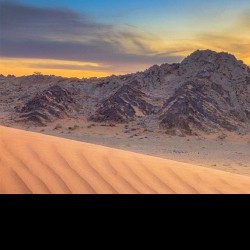
The Wilayat of Mahdah
Mahdah is one of the Wilayats of the Governorate of Al Buraimi in the Sultanate of Oman. It is about 300 km from the capital, Muscat, and it is distinguished by its location near the United Arab Emirates, adjacent to the Emirate of Al Ain, where it is surrounded by the Wilayat of Al Buraimi and the Emirate of Abu Dhabi in the UAE from the southwestern side, the emirates of Dubai and Sharjah on the northern side, and the Wilayats of Suhar and Shinas from the east.
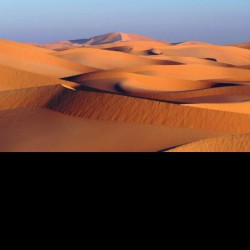
The Wilayat of Al-Sunainah
Al-Sunainah is one of the Wilayats of the Governorate of Al Buraimi in the Sultanate of Oman. It was previously known as the Niyabat of Al-Sunainah. With the issuance of Royal Decree No. 108/2006, the administrative level of the Niyabat of Al- Sunainah was upgraded to a Wilayat, so it is now known as the Wilayat of Al-Sunainah. It is well-known for its camel races, as well as for the textile industries. The most important villages in the Wilayat of Al-Sunainah are Ain Al-Hilwah (Al-Malha), Al-Salahiya, Al-Qabil and Hafit. Among the most important natural features that can be seen in Al-Sunainah are Jabal Hafeet and sand dunes of various natural colours, ranging from light red to dark yellow. The Wilayat of Al Sunainah is also distinguished by the presence of many grazing plains, which provide fertile pasture for beauty, especially after the rainy season. The Wilayat of Al-Sunainah has several valleys that descend from the Hajar Mountains towards the Empty Quarter, such as Wadi Al-Fateh.

Traditional Crafts
In spite of the development and progress achieved by Omani society in all aspects of life, the preservation of the Omani heritage is a fundamental pillar of the modern state and a distinctive feature of the Omani society. Heritage is an essential element in the formation of national identity. Despite the tremendous development of tools and means of production. Omani crafts include: Ship (Dhow) Building Oman's connection with the sea stretches back many centuries when Omani sailors using mast and sail, pioneered sea routes to the cities of the ancient world. Favorable factors were Oman's position at the crossroads of shipping routes which linked the Arabian Gulf to India, the Red Sea and East Africa and her knowledge of shipbuilding. Oman became the first non-European country to extend its influence to Africa where it remained for hundreds of years, due mainly to her ships/dhows. Oman was an important maritime and political power who established relations with China, Great Britain, France, the Netherlands and the United States of America. Throughout its long history, Oman's navy has played a key role in the country's economic success, both in providing the instrument for internal and external trade and in underpinning fishing and pearling activities. The Omani warship "The Sultana" which anchored in New York harbour in 1840, bearing gifts from Sultan Said bin Sultan to the American President, was a symbol of the greatness of the Omani fleet at that time. In Oman two techniques are used in shipbuilding. In the first, timbers are laid side-by-side and pierced at intervals with a fine hand drill. The timbers are then bound together through these holes by means of rope made of coconut fibre and the holes covered with a mixture of fibre or raw cotton soaked in fish, coconut or sesame oil. Arab geographers such as Al Idrissi and Ibn Jubair believed that boats bound with fibres and with flat hulls were safer than those fitted together with rigid iron nails because if they ran onto rocks or came into contact with another hull, they were more flexible. In the second method, nails are used and in essence this is the same technique as used in other countries of the Arabian Gulf and Red Sea. The main type of wood used for the hull and keel is teak which is imported from India. The ribs are made from locally available woods such as qart, sidr and sarar. The tools used in a ship's construction are simple and basic such as the hammer, saw, awl, bow drill, chisel, plane and calking iron. The principal shipbuilding yards in Oman were Sur, Mutrah and Shinas. Omani ships, which can last for 60-100 years, are distinguished by their variety of types although some are no longer made. The largest type was the ocean-going cargo vessel, the baghlah with a length of 135 feet and a load capacity of 150-400 tonnes which could be distinguished by its high poop deck and quarter galleries, its transom stern being pierced by five window apertures and often elaborately carved. The ghanjail was very similar to the baghlah, and is considered by many Omanis to be the most beautiful of the large dhows.The sambuuq used to be one of the most commonly seen Arab vessels: its distinguishing features are the low, curved, scimitar-shaped stem piece and high square stern which lacks a quarter gallery. The word sambuaq used to denote the sewn boats of the Dhofari coast, and may therefore be a term of great antiquity. The government is keen to encourage the maritime tourist industry, in restoring old ships, increasing the use of large vessels/dhows for sea fishing, and also the building of small models of Omani ships for decorative purposes and for i participating in exhibitions. HALWA Omani halwa (sweet) is famous at home and abroad as a symbol of traditional Omani hospitality. It is usually served in Omani homes before drinking Arabic coffee. The main ingredients which go into the making of halwa are: starch, eggs, sugar, water, ghee, saffron, cardamom, nuts and rose water from the Jebel al Akdhar. The ingredients are mixed, in proportions and quantities known only to the skilled halwamaker, and cooked in a mirjnl (large cooking pot used especially for halwa) for a time of not less than 2 hours. The cooking can be done over a gas or electric stove, but the preferred method is over a wood fire made up of snmr wood, known for its durability, smoke and odourfree properties. After cooking, the halwa can be preserved for more than four months without losing its quality, and without the need for refrigeration or preserving agents. Halwa is usually served in a dist, a large earthenware bowl, which can vary in size and composition according to demand or type of occasion. The list can also be made of metal or plastic. Halwa is invariably served at times of joy or sorrow and, on religious occasions and festivals. It graces the tables of every Omani home. Palm leave products The Palm leave products depends on palm trees. There are Al Khaws (palm leaves), the Zawr (palm branches stripped of their leaves), the palm trunk and the fibre. For example, mats(rugs) are made of the two plants called Al Ghadf and Al Rusul which grow on the valley banks where there is an abundance of water. Governorate of Musandamis renowned for its palm leaf industries, such as utensils (Al Surood and Al Makba) which are made from palm leaves. Al Surood is a mat-shaped tray known as Sama, used with food to protect it from insects, while Al Makba fulfils the same purpose. Daggers and Swords A normal or hooked dagger is the most important component of the Omani dress. Omanis are keen to acquire daggers and appear wearing them at official events, national celebrations and weddings. Due to the succession of this social custom from one generation to another, the dagger-making industry has survived the passage of time, albeit with modern improvements. The Omani dagger is an authentic heritage the present generation is keen to pass on to their children. The dagger is also a symbol of manhood and pride among Omani men, who wear it on their leather belts over the dishdashah (long outer garment). Its front section is made of small connected silver pieces, or it may be elegantly embroidered with silver or gold threads. A dagger’s price is determined by the raw material it is made of, usually iron, silver or gold. Although silver daggers are the most common, especially for making the dagger handle, the blade case too determines a dagger’s price. There is the giraffe case, which is the most expensive because it has been banned, and cases made of buffalo skin, sandalwood, and the bitter orange tree. Silver wares The silver industry occupies a key place in the history of Oman. Omani silver jewellery is characterised by a rich sense of the aesthetic and reflects the unique taste of the country’s authentic art, deeply rooted in its history. Silver in Omani society is reflective of its rich social and religious symbols. The Omani dress, whether that of women or men, is never complete without silver jewellery that adds to its beauty, especially apparent in the Omani khanjar (dagger). The Pottery The art of pottery-making is an inherent and distinct testimony to the world’s civilisations as it reflects the extent of their development and advancement. Though pottery-making is one of the simplest forms of art because of its primitive nature, it is in fact, one of the most difficult trades because it involves a form of art. Pottery-making in Oman is considered an ancient industry. The reason it has attracted much interest can be attributed to the multitude of its uses in Omanis’ daily lives. Bahla in A'Dhahirah Governorate is the most famous town for pottery-making in Oman. Pottery is of many kinds and shapes, and its uses and manufacturing materials vary. The pots known as jihal are used for keeping water, the red pots with a thick layer known as khuroos are used for keeping water and dates, the small ones are for keeping honey and grease and the pots known as brams are used as cooking utensils. Pottery is also made as coffee pots and thermoses. Clay is the main component of Pottery and is widely available in Bahla in A'Dhahirah Governorate, where the soil is rich in clay.
