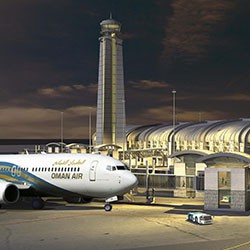
Provinz Wusta
Das Gouvernement Al-Wusta liegt südlich der Gouvernements Ad-Dakhiliyah und Adh-Dhahirah. Es grenzt im Osten an das Arabische Meer und im Westen an die Rub-al-Khali-Wüste, während es im Süden an Dhofar anschließt.
Das Gouvernement zeichnet sich durch zahlreiche Öl- und Gasförderstätten sowie ein ganzjährig gemäßigtes Klima aus.
Die Sonderwirtschaftszone Duqm gilt als eines der bedeutendsten Projekte der Region. Sie ist ein globales, multifunktionales Wirtschaftszentrum mit strategisch günstiger Lage am Arabischen Meer. Dank wettbewerbsfähiger Vorteile und großzügiger Investitionsanreize ist Duqm heute ein fester Bestandteil auf der internationalen Investitionslandkarte.
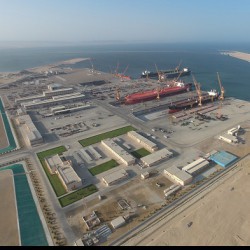
Der Trockendockkomplex in der Duqm-Zone ist Teil der Regierungspolitik zur Entwicklung Al-Wustas und ein strategisches Projekt, das zur Stärkung der nationalen Wirtschaft und zur Erhöhung der internationalen Sichtbarkeit Omans beiträgt.
Darüber hinaus wurden zahlreiche Projekte in den Bereichen Wasser, Strom, Straßenbau, Fischereihäfen sowie Gesundheits- und Bildungswesen gestartet.
Mit seiner vielfältigen Geografie beherbergt Al-Wusta eine Reihe innovativer Projekte in den Bereichen erneuerbare Energien, grüner Wasserstoff, Bergbau, Meeresressourcen, Aquakultur und Naturschutzgebiete.
Das Gouvernement besteht aus vier Wilayats: Haima, Mahout, Duqm und Al Jazir. Das Verwaltungszentrum ist Haima. Laut letzter Volkszählung beträgt die Bevölkerungszahl 61.325.
The Wilayat of Haima
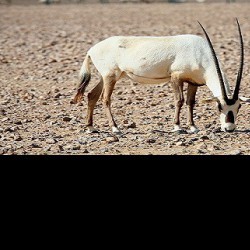
One of the Wilayat of Al-Wusta Governorate. It is bordered to the north by the Wilayat of Adam in the Governorate of Al-Dakhiliya, to the south by the Wilayat of Muqshin in the Governorate of Dhofar, to the east by the Rub’ Al-Khali desert and to the west by the Arabian Sea. It is about 541 km away from the city of Muscat. This wilayat takes the Arabian Oryx as its symbol. The Wilayat of Haima is famous for its natural reserves, as it is unique to all other regions of the Sultanate in the presence of rare and wild animals, especially deer and Arabian oryx (Ibn Soula). These animals live in the area of Ja’louni (the Arabian Oryx Reserve). The area of this reserve is about 25,000 square kilometers and has been registered in the World Heritage Register of the United Nations Educational, Scientific and Cultural Organization (UNESCO). There are also a group of caves, the most prominent of which is the Al-Raki cave, which is located in the northeast of Ja’louni and water flows from inside, but it is not suitable for drinking. There is the Al-Musk cave, which is characterized by water falling from its ceiling in the form of drops without you being able to see this water on its surface. There is also the “Wadi Sarraf” cave, which is located on a slope below the ground level and can be accessed through an opening connected to a tilted corridor, and you have a feeling that this cave has water, but you do not see anything in it. There is a fourth cave called Qattar. It has water but it is not suitable for drinking. Beside the caves there are three water springs, one of which is called “Bouy Al-Hawja”, which is a huge rock that rests on a stone base that forms what looks like a natural canopy. The second one, called “Al-Asla”, is located southwest of the “Habur”, whose lower part forms a pillar of stone topped with stones that make up what looks like a natural canopy as well. The third spring, called “Qarn Anooz” is characterized by the presence of salt dunes.
The Wilayat of Mahout
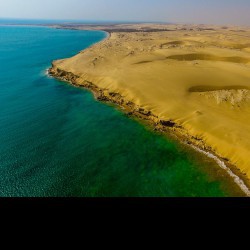
The Wilayat of Mahout is one of the Wilayats of the Governorate of Al-Wusta, which has enjoyed many developmental achievements since the blessed renaissance. It is located in the northeastern part of Al-Wusta Governorate. It is bordered to the east by the Arabian Sea and the wetlands reserve, to the west by the Wilayat of Haima, to the south by the Wilayat of Duqm, and to the north by the Wilayat of Adam in Al-Dakhiliya Governorate and the Niyabat of Sinaw in North Al-Sharqiyah Governorate. Mahout’s city centre is located in the village of Hajj. It has beautiful beaches and there are two lifestyles in the Wilayats. First, the traditional lifestyle followed by the majority of the Bedouin population who own camels and livestock and travel from one area to another, and their movement follows the availability of herbs where it rains. As for the second lifestyle, it forms the concept of modern society, where some families inhabit villages and valleys in a stable manner throughout the year. There are three islands in the Wilayat, the most important of which is the island of Mahout, surrounded by “Crimean” trees from all sides, the Rak island, which has a magnificent landscape, and the “Ob” island, which is characterized by the presence of large numbers of seabirds, such as the seagull and the heron, as well as other types of migratory birds. As for the coasts of the Wilayat of Mahout, the most important ones are: Suwihil Kansah, Ras Ruwais, Al-Khilaf, Nabtoot, Ras Al-Zakhr and Ras Khabat Sarab. There are many handicrafts in the Wilayat of Mahout, including spinning, weaving, animal skin bags industry, making covers from animal hair which are used as a cover for homes and as bedding called “Al-Inah”.
The Wilayat of Al-Duqm
It is one of the wilayats of the Governorate of Al-Wusta. It was a Niyabat belonging to the Wilayat of Haima, and in 1991 its administrative level was changed to a Wilayat by Royal Decree 6/91. The wilayat is bordered to the north by the Wilayat of Mahout, to the south by the Wilayat of Al-Jazir and the Arabian Sea and to the east and to the west by the Wilayat of Haima. It is about 550 km away from the capital, Muscat. It takes Jabal Hamar as its symbol. Duqm during the three months from June to September is characterized by a wonderful summer weather, much like the autumn season in Dhofar. It has many beaches along the Arabian Sea that are characterized by cleanliness and purity of its waters that still defy pollution. One of the most prominent beaches of Duqm in its wonderful cleanliness and clear blue waters is Al-Shu'ayr Beach, which is about 20 km from the city center. Another beach that fans of so-called “camp tourism” flock to is the beach of Ras Madrakah. They visit it by their cars from the neighboring Gulf countries and spend a few days in this wonderful weather between their brothers from the people of Oman in that governorate that takes the form of a triangle whose head faces the waters of the Arabian Sea. There is also the Al-Ashtan area, which is a large low area with green trees and surrounded by rocky mountains from various sides, which is about 20 km from the center of the Wilayat towards the way through the Niyabat of Sinaw. There is another similar area called Al-Jnfal located in the Al-Bateen side, which is a low area that takes its position in the middle of the rocky mountains there and has a water spring, but it is not suitable for drinking. Among the most prominent valleys of Al-Duqm are Wadi Naqaw, as well as Wadi Al-Dabak and Wadi Sai, which is about 2 km from the center of the Wilayat, on the road leading to the Niyabat of Sinaw in the North Sharqiyah Governorate. The beaches of the Wilayat of Al-Duqm are characterized by the presence of some caves that were previously used as shelter from various rains and climatic fluctuations.
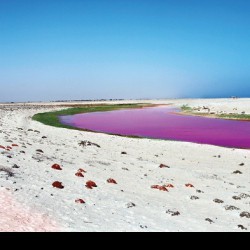
The Wilayat of Al-Jazir
It is one of the Wilayats of the Governorate of Al Wusta. It is bordered to the north by the Wilayat of Al-Duqm, to the south by the Wilayat of Shalim and the Al Hallaniyat Islands in the Dhofar Governorate, to the east by the Arabian Sea and to the West by the Wilayat of Haima. It takes lobster as its symbol. There are many beaches in Al-Jazir, the most important of which is the Rima region, which is about 50 km from the “Kohl”, the Wilayat’s center. It includes Al-Khadhra, where a group of modern housing and necessary services are available, Wadi Ghail Al-Khadhra, Wadi Qaisar and Al-Subaih, located on the beach, which are characterized by its residential pools among the samr (Acacia tortilis) trees, as well as the Mather and Fadhi beaches.

Traditional Crafts
In spite of the development and progress achieved by Omani society in all aspects of life, the preservation of the Omani heritage is a fundamental pillar of the modern state and a distinctive feature of the Omani society. Heritage is an essential element in the formation of national identity. Despite the tremendous development of tools and means of production. Omani crafts include: Ship (Dhow) Building Oman's connection with the sea stretches back many centuries when Omani sailors using mast and sail, pioneered sea routes to the cities of the ancient world. Favorable factors were Oman's position at the crossroads of shipping routes which linked the Arabian Gulf to India, the Red Sea and East Africa and her knowledge of shipbuilding. Oman became the first non-European country to extend its influence to Africa where it remained for hundreds of years, due mainly to her ships/dhows. Oman was an important maritime and political power who established relations with China, Great Britain, France, the Netherlands and the United States of America. Throughout its long history, Oman's navy has played a key role in the country's economic success, both in providing the instrument for internal and external trade and in underpinning fishing and pearling activities. The Omani warship "The Sultana" which anchored in New York harbour in 1840, bearing gifts from Sultan Said bin Sultan to the American President, was a symbol of the greatness of the Omani fleet at that time. In Oman two techniques are used in shipbuilding. In the first, timbers are laid side-by-side and pierced at intervals with a fine hand drill. The timbers are then bound together through these holes by means of rope made of coconut fibre and the holes covered with a mixture of fibre or raw cotton soaked in fish, coconut or sesame oil. Arab geographers such as Al Idrissi and Ibn Jubair believed that boats bound with fibres and with flat hulls were safer than those fitted together with rigid iron nails because if they ran onto rocks or came into contact with another hull, they were more flexible. In the second method, nails are used and in essence this is the same technique as used in other countries of the Arabian Gulf and Red Sea. The main type of wood used for the hull and keel is teak which is imported from India. The ribs are made from locally available woods such as qart, sidr and sarar. The tools used in a ship's construction are simple and basic such as the hammer, saw, awl, bow drill, chisel, plane and calking iron. The principal shipbuilding yards in Oman were Sur, Mutrah and Shinas. Omani ships, which can last for 60-100 years, are distinguished by their variety of types although some are no longer made. The largest type was the ocean-going cargo vessel, the baghlah with a length of 135 feet and a load capacity of 150-400 tonnes which could be distinguished by its high poop deck and quarter galleries, its transom stern being pierced by five window apertures and often elaborately carved. The ghanjail was very similar to the baghlah, and is considered by many Omanis to be the most beautiful of the large dhows.The sambuuq used to be one of the most commonly seen Arab vessels: its distinguishing features are the low, curved, scimitar-shaped stem piece and high square stern which lacks a quarter gallery. The word sambuaq used to denote the sewn boats of the Dhofari coast, and may therefore be a term of great antiquity. The government is keen to encourage the maritime tourist industry, in restoring old ships, increasing the use of large vessels/dhows for sea fishing, and also the building of small models of Omani ships for decorative purposes and for i participating in exhibitions. HALWA Omani halwa (sweet) is famous at home and abroad as a symbol of traditional Omani hospitality. It is usually served in Omani homes before drinking Arabic coffee. The main ingredients which go into the making of halwa are: starch, eggs, sugar, water, ghee, saffron, cardamom, nuts and rose water from the Jebel al Akdhar. The ingredients are mixed, in proportions and quantities known only to the skilled halwamaker, and cooked in a mirjnl (large cooking pot used especially for halwa) for a time of not less than 2 hours. The cooking can be done over a gas or electric stove, but the preferred method is over a wood fire made up of snmr wood, known for its durability, smoke and odourfree properties. After cooking, the halwa can be preserved for more than four months without losing its quality, and without the need for refrigeration or preserving agents. Halwa is usually served in a dist, a large earthenware bowl, which can vary in size and composition according to demand or type of occasion. The list can also be made of metal or plastic. Halwa is invariably served at times of joy or sorrow and, on religious occasions and festivals. It graces the tables of every Omani home. Palm leave products The Palm leave products depends on palm trees. There are Al Khaws (palm leaves), the Zawr (palm branches stripped of their leaves), the palm trunk and the fibre. For example, mats(rugs) are made of the two plants called Al Ghadf and Al Rusul which grow on the valley banks where there is an abundance of water. Governorate of Musandamis renowned for its palm leaf industries, such as utensils (Al Surood and Al Makba) which are made from palm leaves. Al Surood is a mat-shaped tray known as Sama, used with food to protect it from insects, while Al Makba fulfils the same purpose. Daggers and Swords A normal or hooked dagger is the most important component of the Omani dress. Omanis are keen to acquire daggers and appear wearing them at official events, national celebrations and weddings. Due to the succession of this social custom from one generation to another, the dagger-making industry has survived the passage of time, albeit with modern improvements. The Omani dagger is an authentic heritage the present generation is keen to pass on to their children. The dagger is also a symbol of manhood and pride among Omani men, who wear it on their leather belts over the dishdashah (long outer garment). Its front section is made of small connected silver pieces, or it may be elegantly embroidered with silver or gold threads. A dagger’s price is determined by the raw material it is made of, usually iron, silver or gold. Although silver daggers are the most common, especially for making the dagger handle, the blade case too determines a dagger’s price. There is the giraffe case, which is the most expensive because it has been banned, and cases made of buffalo skin, sandalwood, and the bitter orange tree. Silver wares The silver industry occupies a key place in the history of Oman. Omani silver jewellery is characterised by a rich sense of the aesthetic and reflects the unique taste of the country’s authentic art, deeply rooted in its history. Silver in Omani society is reflective of its rich social and religious symbols. The Omani dress, whether that of women or men, is never complete without silver jewellery that adds to its beauty, especially apparent in the Omani khanjar (dagger). The Pottery The art of pottery-making is an inherent and distinct testimony to the world’s civilisations as it reflects the extent of their development and advancement. Though pottery-making is one of the simplest forms of art because of its primitive nature, it is in fact, one of the most difficult trades because it involves a form of art. Pottery-making in Oman is considered an ancient industry. The reason it has attracted much interest can be attributed to the multitude of its uses in Omanis’ daily lives. Bahla in A'Dhahirah Governorate is the most famous town for pottery-making in Oman. Pottery is of many kinds and shapes, and its uses and manufacturing materials vary. The pots known as jihal are used for keeping water, the red pots with a thick layer known as khuroos are used for keeping water and dates, the small ones are for keeping honey and grease and the pots known as brams are used as cooking utensils. Pottery is also made as coffee pots and thermoses. Clay is the main component of Pottery and is widely available in Bahla in A'Dhahirah Governorate, where the soil is rich in clay.