
Provinz Dhahirah
Das Gouvernement Adh-Dhahirah zeichnet sich durch sein landwirtschaftliches, touristisches und historisches Potenzial aus. Es hat während der modernen omanischen Renaissance spürbare Fortschritte in verschiedenen Bereichen erzielt. Es handelt sich um eine halbwüstenartige Ebene, die sich von den südlichen Ausläufern des westlichen Hadschar-Gebirges in Richtung der Rub-al-Khali-Wüste erstreckt.
Im Osten wird es durch das Al-Khor-Gebirge vom omanischen Inland getrennt, im Westen grenzt es an die Rub-al-Khali-Wüste und im Süden an das Gouvernement Al-Wusta.
Das Gouvernement umfasst drei Wilayats: Ibri, Yanqul und Dhank. Das Verwaltungszentrum ist Ibri. Bekannt ist das Gouvernement für seine landwirtschaftliche Bedeutung, seine historischen Verbindungen zu Karawanenrouten sowie seine Öl- und Gasfelder. Die Bevölkerung beträgt 244.437.
The Wilayat of Ibri
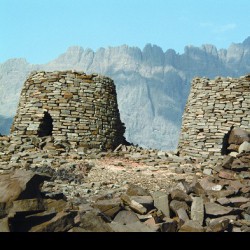
It is one of the Wilayat in the Governorate of Al-Dhahirah. It is bordered by the Wilayat of Haima on the southern side and, by Bahla, Al-Hamra and Rustaq on the east, by Buraimi, Dhank and Yanqul on the north, by the United Arab Emirates on the north western side and by the Kingdom of Saudi Arabia from the southern western side. It is about 279 km from the city of Muscat. Its emblem consists of two camels and the khalas palm tree. The Wilayat of Ibri is distinguished by its numerous monuments, including forts, castles, and towers. There is also an antique house known as the House of Al Sarooj, and there are Al-Ainain and Al-Salami castles. Among the most important towers in Ibri is the Sharia tower, which was used for guarding. Among the tourist attractions in Ibri, in addition to the previous monuments, are springs and falajs. In the village of Muqniat, there is Ain al-Haidath (Al-Haidath spring), as well as Ayn Al Janat (Al Janat spring), which are located in the middle of forests of palm trees and mango trees. As for the falajs, the most important of them is Falaj Al Mafjoor in Ibri as well as the falajs of Al Iraqi, Al Ainain, Al Draiz, Al Qarwan. There is also another tourist attraction, the village of “Dham” in Wadi Al-Ain, which large numbers of citizens and residents visit, especially during the rains, where water falls from Jabal Al-Kour and Jabal Al-Akhdar. Jabal Al-Kour, which is located in Wadi Al-Ain, is considered one of the tourist areas in the Wilayat of Ibri, because it contains stunning natural scenery. There are two roads that lead to this mountain, one from the Wilayat of Al Hamra, Al Dakhiliya Governorate, and the other from the Wilayat of Ibri itself. There are many crafts and traditional industries in the Wilayat of Ibri. Among the most prominent crafts are: grazing, weaving and agriculture which include dates, wheat, orange, grapes, citrus, vegetables and animal feed. Among the most important industries are beshoot making, manasil making, embossed animal skin bags and other accessories for decorating camels in addition to palm fronds weaving, leather, pottery, traditional building materials, and Omani sweets (locally know as Omani Halwa).
The Wilayat of Dhank
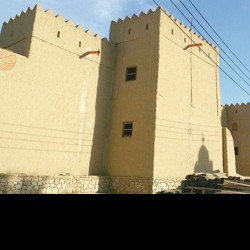
It is one of the Wilayats of the Governorate of Al-Dhahirah. It is bordered to the north by the Wilayat of Mahadhah, to the south by the Wilayat of Ibri, to the east by the Wilayat of Yanqul, and to the west by the Wilayat of Al-Sunainah. Wadi Dot is the emblem of the Wilayat of Dhank. It is one of the ancient historical wilayats, with the farms of Falaj Al-Bazili located in the west of the Wilayat and the Imam’s Fort in its central area, are among the signs that indicate the ancient interest in the Wilayat of Dhank. Imam Saif bin Sultan Al-Yarubi built Falaj Al-Bazili and planted large areas around it. Imam Azzan bin Qais also restored the Imam’s Fort in its central area. In the Safalat Al-Wahshi area, Ibn Al-Ramtha established the Al-Oud Castle. There are also a number of other forts in the Wilayat, the most important of which are Al-Sharayi’, Al-Subikhah, Al-Marqou', Al-Aqar, Dot, Al-Jifra, Bilt Al-Khali, and Al Fateh Castle. There are six towers: Al-Zafr, Al-Taf, Al-Ghafa, Al-Khali, Abu Karba, and Al-Qalaa. There are several falajs including Al-Salad, Al Sama'a, Al-Muhaidith, Al-Taf, Al-Sallalah, Qumaira, Al-Rahba, Belt, Al-Fateh, Al-Janibi, Al-Khali and Khumat. There are two water springs: Al-Masfiya and Bani Sa`dah. There are a number of traditional crafts and industries in the Wilayat including carpentry, blacksmithing and agriculture of dates of all kinds, vegetables, neel, fruit and animal feed. The inhabitants of the Wilayat also practice sheep and cattle grazing, palm fronds and leaves production, traditional Omani building materials, and Al-Neelah industry.
The Wilayat of Yanqul
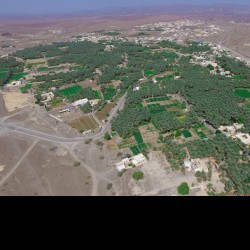
It is one of the Wilayats of the of Governorate Al-Dhahirah. It is bordered to the north by Suhar, to the south and east by the Wilayat of Ibri, and to the west by the Wilayat of Dhank. Jabal Al Hawra (Mount Al Hawra) is the emblem of the Wilayat of Yanqul. The Wilayat of Yanqul is famous for Jabal Al-Hawra, which is the highest mountain peak, taken as its emblem. There are also about 16 towers, castles and forts spread in its various regions dating back hundreds of years. Among its most important forts is Bayt Al-Marah, which is still standing today. There is also a group of its ancient monuments, which are in the form of a number of buildings above Jabal Al-Khattim, which rises from the surface of the earth by a distance of 600 feet. Among the most important tourist attractions is Wadi Al-Raki, which is characterized by its beautiful scenery and its beautiful varied trees. In the village of Al-Sudairiyeen, there is another region with abundant water and stunning natural scenery. The village of “Al-Waqbah” is also famous for its abundance of valleys and its cold weather. Through archaeological surveys carried out in the Wilayat of Yanqul, an ancient burial site was discovered in the village of Safri, which dates back to the period of Samad. An archaeological site in the village of Al-Madam that includes some tombs dating back to the same period was discovered in the Wilayat of Yanqul as well. Mines traces were also found in two locations, Al-Raki and Al-Ma’aidan. Some artefacts were also found in Jabal Al-Khattim. The history of the Wilayat of Yanqul was associated to a number of political, scientific, and literary personalities, including King Makhzoum bin Falah Al Nabhani and Nasser bin Qotton.There are a number of traditional crafts and industries in the Wilayat of Yanqul. Among the most prominent crafts practiced by the inhabitants of Yanqul are livestock raising, agriculture (dates, wheat, sugar cane, citrus and fruit), in addition to the textile industry, palm leaves, jewellery making, trade and sugar production.


